
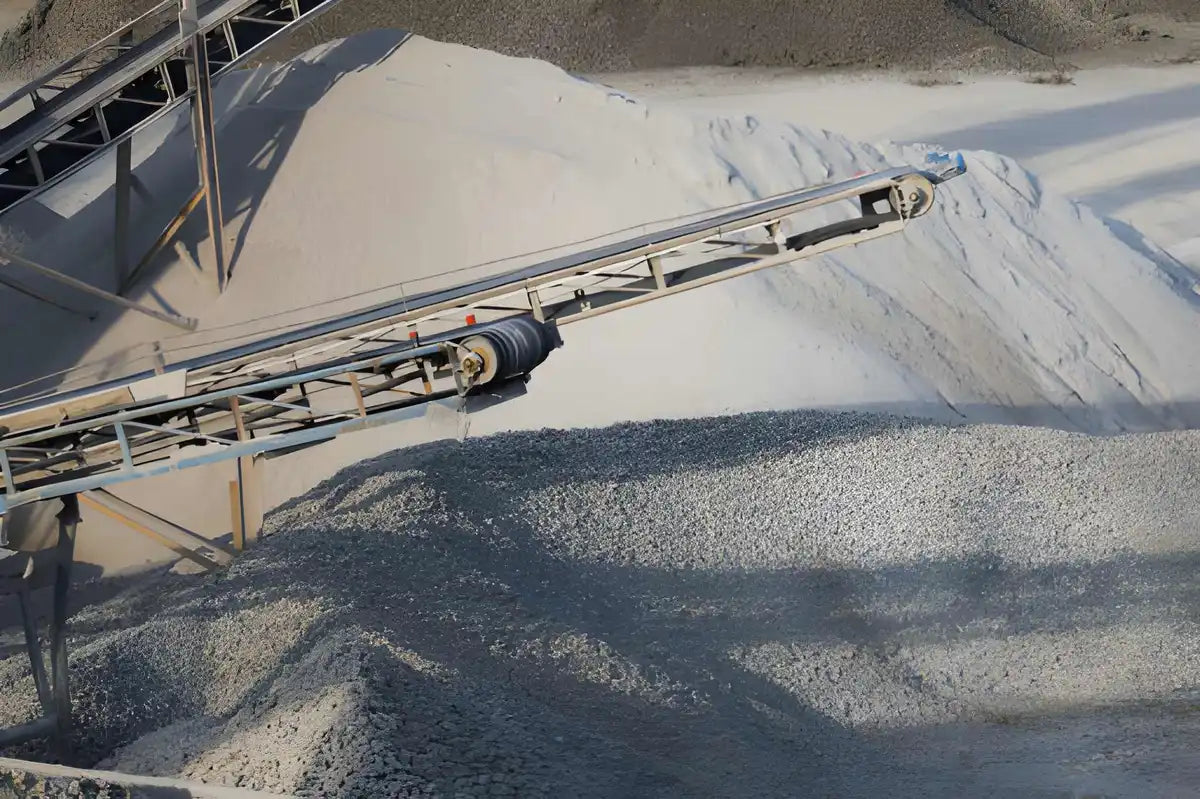
The idea of having fun in the afternoon usually doesn't include standing in a gravel yard and looking at two gray piles that look very similar. However, choosing wrongly between 304 vs. 57 crushed concrete can result in a driveway that sinks, a clogged drain, or a patio base that shifts within a year.
This guide explains how these two materials differ, how much they cost, and which is best for your project.
Table of Contents
-
What Is 304 Crushed Concrete In Fort Mill, SC?
-
What Is 57 Crushed Concrete In Fort Mill, SC?
-
What's The Difference Between 304 Vs. 57 Crushed Concrete In Fort Mill, SC?
-
How Much Does 304 Vs. 57 Crushed Concrete Cost In Fort Mill, SC?
-
How Does Fort Mill, SC's Climate Affect Your Decision?
-
When Is 304 Vs. 57 Crushed Concrete The Better Option?
-
Conclusion
- Frequently Asked Questions
What Is 304 Crushed Concrete In Fort Mill, SC?
#304 crushed concrete is a thick, tightly packed base material made of small pieces of crushed concrete mixed with very small particles, basically dust. Contractors use it under patios, driveways, and parking lots because it hardens into a stable, hard surface.
Homeowners in Fort Mill, SC frequently use #304 as the foundation layer before applying a top coat of gravel or asphalt.
How Is #304 Made?
The mixture is made out of anything from tiny stones to fine powder by crushing, screening, and blending old concrete slabs and chunks. It can pack down tight because the particles are different sizes.
Where Is #304 Crushed Concrete Used?
It is most effective when used as the foundation layer beneath patios, sheds, and driveways. Also, it fills in low spots in yards so that you can build on a firm, level surface.
304 is the base material of choice if you need something that bonds together and remains in place under weight.
What Is 57 Crushed Concrete In Fort Mill, SC?
57 Crushed concrete is a rougher type of stone that is usually about ¾ to 1 inch thick and doesn't have much or any fine material mixed in. Water flows through it swiftly rather than collecting because of the spaces between the stones. This makes it a popular choice for gravel driveways and drainage systems.
What Size Is #57 Stone?
Each piece in the pile is about the same size, measuring between ¾ and 1 inch wide. It is not held together by dust or filler.
Best Uses For #57 Crushed Concrete
It is used by homeowners for septic beds, French drains, and the upper layer of driveways where a crunchy, well-drained surface is needed. It's also a common option for pipe backfilling. #57 is the best material to use when draining is more important than a rock-solid, packed surface.
Can #57 Crushed Concrete Be Used Alone For A Driveway Base?
No, most driveways require a #304 base underneath it first because it doesn't compact properly on its own.

What's The Difference Between 304 Vs. 57 Crushed Concrete In Fort Mill, SC?
What makes #304 crushed concrete different from #57 crushed concrete is the size of the pieces and how well they drain. #304 is a mix of different sizes, from large rocks to fine dust, and it packs down into a solid base. #57, on the other hand, is a uniform, larger stone that drains well but doesn't pack down the same way.
|
Feature |
#304 Crushed Concrete |
#57 Crushed Concrete |
|
Particle size |
Mixed, down to fine dust |
Uniform, ¾ to 1 inch |
|
Compaction |
Packs tight and firm |
Loose, does not compact |
|
Drainage |
Slower, holds some moisture |
Fast, water passes through |
|
Common use |
Base layer, driveways |
Drainage, top layer |
|
Cost |
Slightly higher |
Slightly lower |
Size And Gradation
304 has strength because it has a mix of small and large particles that naturally fill in the gaps. In contrast, the larger, uniform stones of #57 cause an open space between the fragmented fragments.
Drainage And Compaction
The #304 base is packed down so that it doesn't rut when vehicles drive on it, and the #57 structure is open so that water can flow away from structures or beds.
Choose #304 if strength and stability are your top priorities; #57 is a better option if quick drainage is your top concern.
How Much Does 304 Vs. 57 Crushed Concrete Cost In Fort Mill, SC?
Natural gravel is typically more expensive than crushed concrete, and the cost difference between #304 and #57 crushed concrete is typically only a few dollars per ton. The exact cost varies on the supplier, how far the material needs to be delivered, and how much the project needs.
-
- #304 Crushed Concrete: typically, $10 to $18 per ton
- #57 Crushed Concrete: typically, $8 to $16 per ton
- Delivery Fees: vary according to the distance from the supplier's yard
- Bulk Orders: frequently lower the price per ton
- #304 Crushed Concrete: typically, $10 to $18 per ton
Average Cost per Ton
Most suppliers charge by the ton for both materials, and the price usually goes down when you buy in bulk for bigger driveway or drainage projects.
Delivery Costs In Fort Mill, SC
Local suppliers in or near Fort Mill, SC usually charge a flat delivery fee plus a mileage fee for jobs that are outside their normal service area.
Deliveries are often the biggest difference between providers, so add a small amount to your budget above the base price to cover them.
How Does Fort Mill, SC's Climate Affect Your Decision?
When deciding between 304 vs. 57 crushed concrete, drainage is a significant consideration due to South Carolina's freeze-thaw winters. Appropriate layering is more important here than in dry areas since water that sits and freezes beneath a driveway or patio can heave and damage the surface.
Freeze-Thaw Considerations
If you properly compact a #304 base, it will shed most of the water on the top. Adding a #57 drainage layer underneath it lowers the risk of ice damage even more.
Drainage Needs
57's quick-draining qualities prevent water from collecting against pathways or foundations in low-lying yards or places close to downspouts.
Combining the two materials frequently works better than utilizing just one in a climate like Fort Mill, SC.
Does Frost Affect Crushed Concrete Driveways?
Yes, water that doesn't drain properly can freeze, spread, and crack the surface over the winter.

When Is 304 Vs. 57 Crushed Concrete The Better Option?
The decision between 304 vs. 57 crushed concrete depends on whether the project must move water or support weight. They are usually used together, with #304 as the base and #57 or another material on top for driveways and patios.
-
- Choose #304 if you're constructing a foundation for a patio, driveway, shed pad, or parking space
- Choose #57 if you need quick water drainage or are establishing a septic bed or French drain
- Use both if you want a base that drains well and is sturdy, which is common in driveway construction
Best For Driveways
For a smooth, well-drained surface, driveways usually need a #304 base that has been packed down and then a wear layer of gravel or #57 stone.
Best For Drainage Projects
Since compaction isn't the objective in drainage trenches, footing drains, and septic systems, #57 alone is preferred.
Conclusion
304 vs. 57 crushed concrete isn't really a competition; it comes down to what you need the material for. The best course of action for most of Fort Mill, SC homeowners is to stop considering it as an either-or choice. Freeze-thaw winters are hard on bases that don't drain well, so using a #304 layer that is packed down and a #57 layer underneath (or on top, depending on the job) often works better than using either material alone.
Do some research on what your project really needs before you order a truckload: a surface that can hold weight, a way for water to get out, or both. The decision between 304 vs. 57 crushed concrete should be based more on that response than on the cost per ton.
Frequently Asked Questions
1. Is 304 or 57 crushed concrete cheaper?
#57 crushed concrete is usually a little cheaper than #304 per ton. The exact gap depends on your local supplier and how far the material needs to travel. Buying in bulk tends to narrow the price difference further.
2. Can I mix 304 and 57 crushed concrete together?
Yes, and many projects do exactly that. A #304 base layer topped with #57 gives you a stable, well-drained surface. This combination is especially common for driveways in wetter or colder climates.
3. How deep should a crushed concrete base be?
Most driveway bases use 4 to 6 inches of compacted #304. Heavier vehicle traffic, like RVs or trucks, may call for closer to 8 inches. Always compact in layers rather than all at once.
4. Does crushed concrete crack or crumble over time?
Properly compacted #304 holds up well for years with minimal maintenance. Poor drainage underneath is the most common cause of long-term cracking. Adding a drainage layer, such as #57, helps prevent this.
