
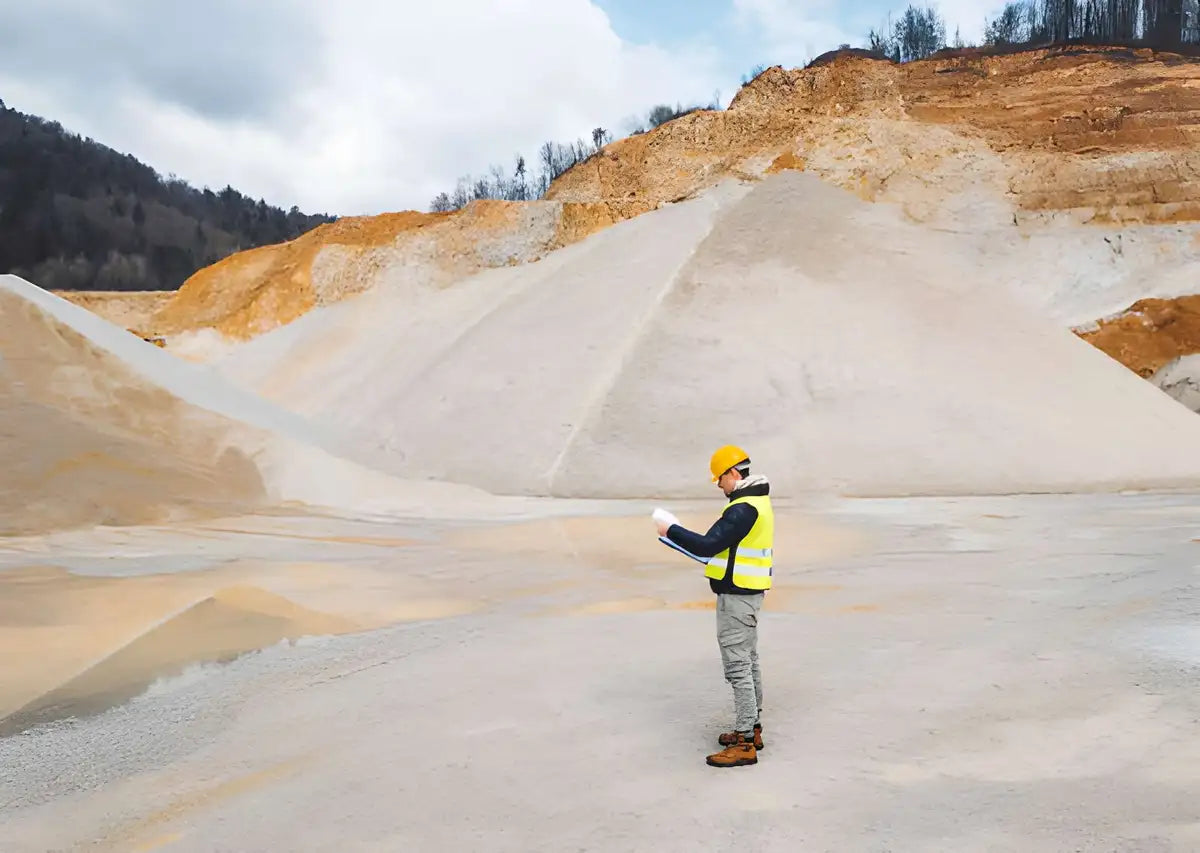
It's like baking without measuring flour when you pour concrete without the right amount of sand. You either run out of sand in the middle of the pour or have to pay for the sand you don't use. This guide will show you how to calculate concrete sand you need for every project, from a small patio to a full pathway.
Table of Contents
-
What Is Concrete Sand In Fort Mill, SC?
- How Do You Calculate Concrete Sand Needed For A Project In Fort Mill, SC?
-
How Much Concrete Sand Do You Need For Common Projects In Fort Mill, SC?
-
What Factors Change How Much Concrete Sand You Need?
-
How Much Does Concrete Sand Cost In Fort Mill, SC?
-
What Mistakes Should You Avoid When You Calculate Concrete Sand?
-
Conclusion
- Frequently Asked Questions
What Is Concrete Sand In Fort Mill, SC?
In concrete mixes, concrete sand is used to fill in the gaps. It is coarse, washed sand. It gives concrete its strength and flawless finish by filling in the spaces between gravel and cement. It is used by Fort Mill, SC builders for patios, driveways, pathways, and foundations.
Concrete Sand Vs. Mason Sand
Compared to mason sand, concrete sand has bigger, coarser grains. Mason sand, which is used for mortar rather than structural concrete, is finer.
Why Grain Size Matters?
Gravel and cement stick together better with bigger grains. Concrete made solely of fine sand is fragile, weak, and prone to cracking under weight.
Where Does Concrete Sand Come From?
Most of the sand used in concrete comes from riverbeds or mines. It is then washed to get rid of clay and silt. Washing lessens shrinkage cracks and increases strength.
Concrete sand typically includes:
- Crushed stone pieces or coarse quartz
- Minimal silt or clay
- An angular, rough surface for better binding
- Consistent grain size, often ranging from 0.06 to 2 millimeters
Tools You'll Need Before You Start
Before you start, gather a notepad, tape measure, calculator, and the mix ratio for your project. A shovel and wheelbarrow are also beneficial once the sand has been delivered to the site.
How Do You Calculate Concrete Sand Needed For A Project In Fort Mill, SC?
To can calculate concrete sand, multiply the area's length, width, and depth to get cubic feet, which can then be converted to cubic yards. To get yards, divide by 27, then multiply by the amount of sand in your mix ratio. It is common for residential mixes to have one part sand and two to three parts gravel and cement.
The Basic Formula
Length (ft) × Width (ft) × Depth (ft) ÷ 27 = cubic yards of material needed
Step-By-Step Instructions
1. Determine the project area's length and width in feet
2. Determine the concrete slab's depth (thickness) in feet
3. To calculate cubic feet, multiply length × width × depth
4. To convert to cubic yards, divide the total by 27
5. To calculate the volume of sand, multiply by your sand ratio, which is often 25 to 33%
6. Add an additional 10% for settling and waste.
Using An Online Sand Calculator
Most suppliers provide complimentary online tools to help facilitate this task. When you enter your measurements, the tool automatically converts them into cubic yards of sand, saving you time and lowering the possibility of an expensive mistake.
Delivery delays and unnecessary trips to the supplier can be avoided by doing this calculation correctly the first time. You can buy sand with confidence once you know how much you need instead of guessing.
How Much Concrete Sand Do You Need For Common Projects In Fort Mill, SC?
How much sand you need depends on the size of the project and how thick the slab is. Comparing typical projects side by side is helpful because a small patio requires significantly less sand than a full driveway or foundation slab.
|
Project Type |
Typical Area |
Sand Needed |
|
Walkway |
3 ft × 20 ft |
0.2 cubic yards |
|
Patio |
12 ft × 12 ft |
0.6 cubic yards |
|
Driveway |
20 ft × 40 ft |
3.0 cubic yards |
|
Foundation slab |
30 ft × 50 ft |
5.5 cubic yards |
Small Residential Projects
Sand for walkways and patios usually doesn't take up more than a cubic yard. You don't need a calculator to measure and order these smaller jobs by hand.
Large Commercial Or Driveway Projects
It takes more than one delivery and careful planning to get bigger slabs. Add 10% more sand in your order to account for uneven ground, spills, and packing down the sand during the pour.
These figures are estimations based on common depths. Always make sure you and the worker agree on the exact depth and mix ratio before you place your order.
What Factors Change How Much Concrete Sand You Need?
Your overall volume of sand is influenced by climate, mix ratio, and slab thickness. More sand is needed per square foot of surface when the slab is thicker, or the mix ratio is richer.
Mix Ratio And Slab Thickness
Compared to a 6-inch slab of the same size, a 4-inch slab requires less sand. A slightly different amount of sand to gravel is also used in mixes with more strength.
Climate Considerations In Fort Mill, SC
Sand's curing time and moisture level can be affected by cold and wet weather. To avoid extra water weight and wrong measurements, order sand from a covered, dry storage area.
Other factors to consider:
- Ground Condition: additional base sand is needed for uneven soil
- Mix Strength: the sand ratio changes slightly for higher PSI mixtures
- Project Shape: section-by-section math is required for irregular shapes
- Waste Factor: always add 5 to 10% more sand
By taking these factors into consideration early on, you can avoid shortages in the middle of a project and maintain an accurate budget throughout.
How Much Does Concrete Sand Cost In Fort Mill, SC?
Concrete sand usually costs between $15 to $40 per cubic yard, but this depends on how much you need and how far you want it delivered. The cost per yard goes down when you buy more, but it goes up when you buy less or pay for delivery.
|
Feature |
Bulk Order (5+ yards) |
Small Order (under 2 yards) |
|
Price per yard |
$15 to $25 |
$30 to $40 |
|
Delivery fee |
Often included |
$30 to $75 extra |
|
Best for |
Driveways, foundations |
Patios, repairs |
Cost By Quantity
You can nearly always reduce your cost per yard by purchasing more sand at once. Suppliers offer lower bulk rates to customers who buy in bulk.
Delivery Vs. Pickup Costs
You can save money on delivery fees by getting the sand yourself, but you'll need a truck or trailer that can handle the weight. It's easier and safer to deliver large volumes at once.
Comparing quotes from two or three local suppliers prior to placing an order can result in substantial savings, particularly for projects that require multiple deliveries.
Do You Need To Buy In Bulk?
Yes, buying in bulk definitely saves you money in the long run if you need more than two cubic yards for your project, even after adding delivery costs.
What Mistakes Should You Avoid When You Calculate Concrete Sand?
The most common mistake is failing to account for waste, which results in running out of water in the middle of a pour. A lot of mistakes are made when homeowners skip unit conversions and misread depth measures.
Skipping The Waste Factor
Add 5 to 10% more sand to your order every time. More than most homeowners anticipate that the usable volume of your property is affected by compaction, uneven ground, and spillage.
Using The Wrong Mix Ratio
Sand-to-cement ratios vary depending on the project. Consult the engineering specifications or local building codes of your project before placing an order for materials.
Avoid these mistakes:
- Measuring in inches rather than feet
- Disregarding uneven subgrade or slope
- Ordering exact amounts with no safety buffer
- Mixing different types of sand in one pour
You can keep your schedule and your budget safe by double-checking your math before you place your order.
Conclusion
It's helpful to know how to calculate concrete sand you need for any project. Before placing an order for material, make sure you measure precisely, add a waste buffer, and compare quotes from local suppliers. Homeowners and contractors in Fort Mill, SC can plan any size project with confidence from the steps above.
Frequently Asked Questions
1. How many bags of sand equal one cubic yard?
One cubic yard equals about 54 standard 50-pound bags of sand. This varies slightly by brand and moisture content. Always check the bag label for exact yield.
2. Can you use regular sand instead of concrete sand?
No, regular play or beach sand lacks the coarse grains needed for structural strength. It also often contains salt or organic debris. Always use washed concrete sand for structural pours.
3. Does temperature affect how much sand you need?
Temperature does not change the sand volume itself, but it affects curing speed. Cold weather slows curing, so plan deliveries and pours around the forecast.
4. How do you calculate concrete sand for a curved patio?
Break the curve into smaller rectangular or triangular sections first. Calculate each section separately, then add the totals together afterward. This keeps your estimate accurate despite the irregular shape.
