
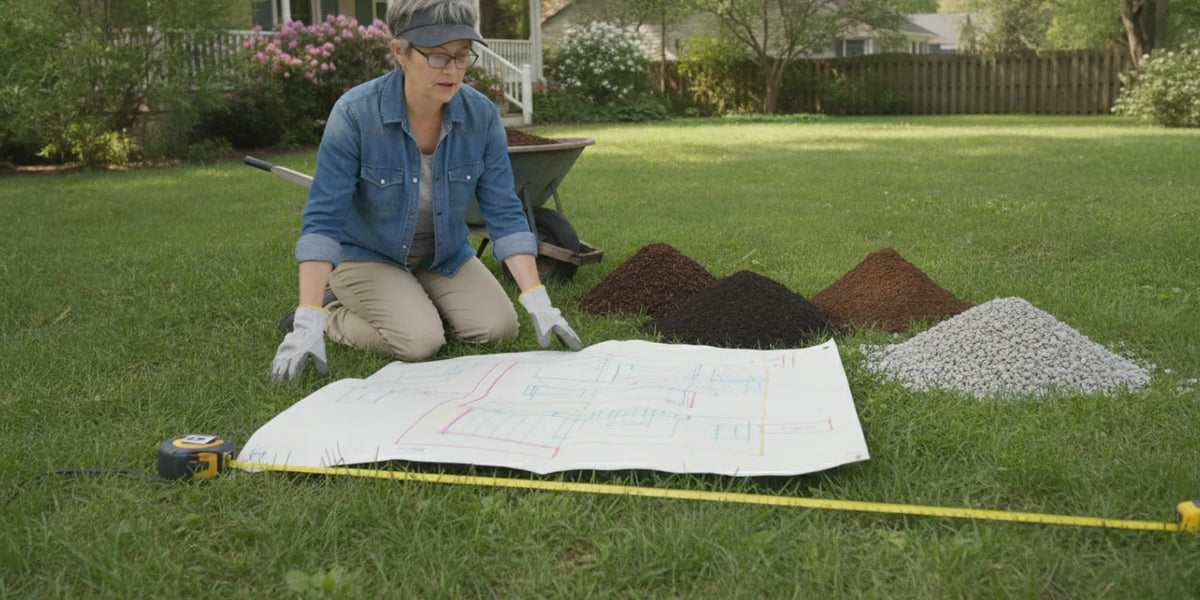
Choosing bulk landscape materials in Ohio is easier when you start with the job, not the pile. A bed refresh, lawn repair, drainage project, and driveway each call for different material, quantity, and delivery plans. Use this guide to narrow the choice, calculate a first estimate, and identify what to confirm before ordering.
Call to discuss material availability and delivery options
Start with the project you need to finish
Write down the purpose of the material before comparing products. Ask what the finished surface should do: cover soil, support plants, build up a lawn, manage water, or provide a stable driving surface. The intended use determines the material and its preparation. A decorative layer is not automatically a substitute for a structural base, and topsoil is not a fix for every drainage issue.
- For planting beds: Mulch covers exposed soil and gives beds a finished look. Choose a type and color that suit the site, then check how much existing mulch or debris must be removed first. See mulch types explained for Ohio before settling on a product.
- For lawn or garden soil work: Topsoil is used where a project needs a soil layer, while compost is commonly used as an organic soil amendment. Their roles are different; decide whether you need a growing medium, an amendment, or both.
- For paths, beds, and hardscape accents: Decorative stone is selected for appearance and intended placement. For a driveway, think beyond the visible stone: the base, traffic, water movement, and upkeep matter too. Our guide to using rocks with mulch in Ohio covers a narrower bed-design question.
- For a driveway or working surface: Compare aggregate options by how the area will be used, how water should move, and what base preparation is needed. The right specification can depend on soil conditions and traffic, so confirm the material and installation plan for the site rather than choosing by color alone.
For more detail on bed coverage and plantings, review mulch choices for Ohio gardens and flower beds. Product names and availability can vary by region and warehouse, so a guide is a starting point, not an inventory promise.
For a drainage or grading concern, do not assume adding topsoil or stone will solve it. Check local requirements and consult a qualified professional; the USDA Natural Resources Conservation Service provides soil and water conservation guidance.
Compare material types by use
This quick comparison is a planning aid. It does not replace a site-specific specification, especially where drainage, vehicle loads, or construction requirements are involved.
| Material | Common project fit | What to confirm |
|---|---|---|
| Mulch | Surface cover for landscape beds | Type, color, depth, existing bed condition, and whether installation labor is needed |
| Topsoil | Adding or renewing a soil layer | Project depth, grading plan, and whether the soil is appropriate for the intended use |
| Compost | Soil amendment for garden or landscape work | Whether it is being used alone or blended into existing soil |
| Decorative stone | Bed accents and selected landscape surfaces | Stone size, coverage, edging, and how it will meet neighboring surfaces |
| Driveway aggregate | Driveway or utility surface when specified for the site | Base, traffic, drainage, layer sequence, and placement method |
Related products


Estimate how much material you need
Measure the area before ordering. For a rectangle, multiply length by width in feet. For an irregular bed, divide it into smaller rectangles or triangles, estimate each area, then add them together. Record dimensions and the planned layer depth so you can check the calculation later.
For a level area, a useful first estimate is:
Cubic yards = area in square feet × depth in inches ÷ 324.
For example, a 500-square-foot bed covered to a depth of 3 inches is about 4.6 cubic yards: 500 × 3 ÷ 324. This is a volume estimate, not a guaranteed order quantity. Uneven ground, settling, compaction, grading, and the final depth can change what a project uses. For several separate areas, calculate each one and total the volumes.
Do not convert cubic yards to tons using one universal number. Weight varies with material type, moisture, and other conditions. Ask which unit applies to the product you are ordering and whether the product is sold by yard, ton, or another unit. If you want to refresh an existing bed, estimate its actual bare or low spots instead of assuming the whole area needs a full new layer. The related guide explains the relationship between a yard of mulch and bag quantities.
Plan pickup, delivery, and access separately
A material choice is only one part of the order. Check the selected warehouse, product, unit, and fulfillment method. Sagamore serves Ohio and other regions, but service eligibility and stock can vary by address and location. Confirm the specific material and pickup location before making a trip. Do not assume every product is available at every yard.
For delivery, consider where a truck can travel and unload. Check driveway width, overhead branches or wires, slope, soft ground, gates, turning room, and the distance from the unloading point to the work area. Tell the supplier about obstacles and restrictions in advance. A delivery to the property is not the same thing as moving material to its final position.
When access is difficult or the material needs to be placed precisely, ask whether conveyor-based slinger placement is suitable for the site. Slinger placement is a separately scoped service, not ordinary dump delivery and not mulch blowing. Reach, material, setup, access, and job size affect feasibility; a general example should not be treated as a promise for an individual property.
Likewise, material purchase and installation are different paths. Ohio mulch installation is described as coordination with trusted contractors and is subject to a five-yard minimum. For Carolina customers, the stated support is material delivery to the customer's chosen landscaper unless a particular arrangement is confirmed. Confirm labor, scope, and responsibility directly; do not assume delivery includes installation.
Confirm the full delivered or project cost
Product price is only one part of the amount due. Product pricing can depend on material, region, unit, warehouse, and date. Delivery, taxes, labor, placement, and other charges may be separate. Check the checkout details for shipping estimates, and request a project quote for installation, slinger work, concrete, screening, or other services. A quote should clarify what is included and what the property owner must prepare.
Before confirming, review the product name and unit, estimated quantity, pickup or delivery selection, destination address, and any site notes.
Use this pre-order checklist
- Identify the job and the finished result you need.
- Choose a material appropriate to the use; confirm specifications for driveways, grading, or drainage work.
- Measure length, width, and intended depth. Keep your calculation and units together.
- Ask whether the product is sold by cubic yard, ton, or another unit, and how actual quantity is determined.
- Verify warehouse, regional availability, pickup or delivery eligibility, and the current fulfillment estimate.
- Describe access conditions and decide whether ordinary delivery is enough or separately quoted placement is needed.
- Confirm whether installation labor is included, coordinated separately, or not part of the order.
- Review product, quantity, shipping estimate, taxes, and additional charges before checkout or quote approval.
Call to confirm your project’s material and fulfillment options
Common questions about bulk materials
How do I know whether I need mulch, topsoil, or compost?
Start with the function. Mulch is generally a surface cover for beds, topsoil supplies a soil layer, and compost is commonly used as an amendment. A project may use more than one, but the materials are not interchangeable. If you are correcting grading or drainage, establish that plan before ordering soil or stone.
Should I order extra material?
Not automatically. Your estimate may change if the ground is uneven, the target depth is revised, or the project requires grading or compaction. Check measurements and site conditions, then discuss uncertainty with the supplier before choosing a quantity. For bulk orders, unused material can be difficult to handle, so base the decision on the actual project rather than a blanket percentage.
Can a delivery truck place material at the exact work area?
It depends on truck access, unloading conditions, distance, material, and the service arranged. Standard delivery and slinger placement are not the same. Share site details and ask for a project-specific determination; no general reach or capacity figure guarantees access at a particular home.
Does a bulk material order include installation?
Not unless the order or service scope says so. Material supply, delivery, placement, and installation are separate decisions. Confirm who provides labor and what preparation, spreading, grading, or cleanup is included before approving a project.
A careful measurement and a clear delivery plan make it easier to choose the right bulk landscape materials for an Ohio project and avoid surprises on order day.
