
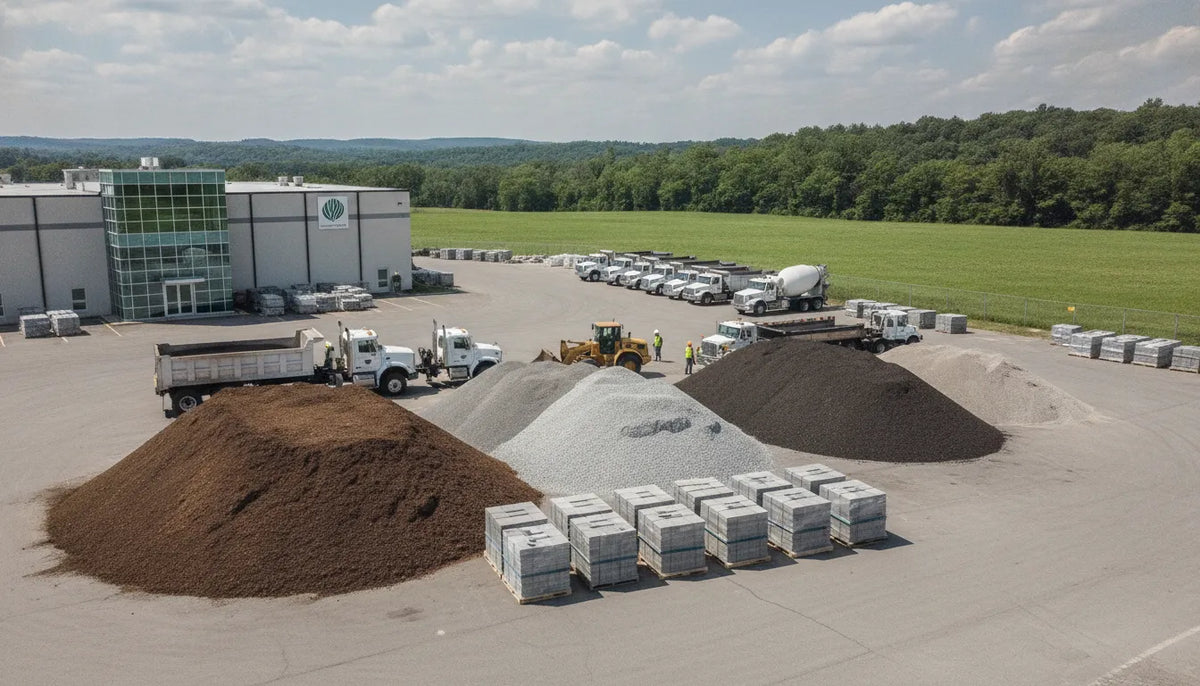
Ohio contractors have enough to coordinate without chasing down separate suppliers for every load of mulch, topsoil, stone, sand, and concrete. The right materials and delivery plan can help crews stay on schedule, reduce extra handling, and keep a job site organized. But choosing products by name alone can lead to problems if the material doesn’t meet the project specifications or arrive where it’s needed. This guide to bulk landscaping materials for contractors in Ohio covers what to order, how to estimate quantities, and what to confirm before delivery. You’ll also learn how dump-truck and slinger-truck services can support different site conditions and placement needs.
Key Takeaways
- Match materials to the project: Check the plans and confirm each product’s composition, gradation, screening, and intended use.
- Calculate quantities and costs: Measure each work area, estimate volume, and verify pricing units, load minimums, delivery charges, and placement fees.
- Coordinate delivery early: Confirm availability, lead times, truck access, drop locations, and site readiness before scheduling crews.
What Bulk Landscaping Materials Can Ohio Contractors Order?
Ohio contractors can order a range of bulk materials for planting, site preparation, paths, bases, and drainage work. Common choices include topsoil, mulch, gravel, crushed stone, limestone, granite, sand, and fill dirt. Some suppliers also offer screened mulch and recycled materials, such as greenwaste or foundry sands.
Start by matching each material to its job. Topsoil and mulch are often used in planting beds and lawn work, while aggregates can serve paths, bases, or drainage plans. Sand and fill dirt may help with bedding, leveling, or backfill. The right choice depends on the project plans, the desired finish, and how the material needs to perform.
Before ordering, check the product’s composition, size or gradation, screening, and intended use. Names can vary between suppliers, so ask for product details rather than relying on the label alone. If the project has written specifications, confirm that the material meets them with the project team and supplier. Consider access and placement, too: a material that works for the design still needs to be delivered and spread efficiently at the site.
Creating a material list by task can help crews estimate quantities and coordinate deliveries. It also gives your supplier the information needed to recommend suitable products and confirm availability before you schedule the work.
Use topsoil for planting beds, grading, and lawn prep
Topsoil provides a growing medium for planting beds and lawn areas. Contractors may also use it to help prepare lawns or shape grades, depending on the project plan. Before ordering, determine the depth required and whether the topsoil is suitable for the plants or lawn being installed.
Ask your supplier about the material’s composition and whether it has been screened or processed. These details can affect how easily crews spread and finish the load. Rocky Lea Mulch’s guide to bulk landscaping supplies outlines topsoil’s common uses in planting, grading, and lawn preparation. If plans specify a soil blend or other requirements, confirm the product meets them before ordering.
Use mulch to retain moisture, suppress weeds, and finish beds
Mulch helps planting beds retain moisture, limits weed growth, and gives landscaped areas a finished appearance. It can be a practical choice for residential and commercial projects, especially when crews need to cover larger bed areas. Choose the type and depth based on the landscape plan and the finish the customer expects.
Ask what the mulch contains and whether it has been screened, since products can vary in consistency and appearance. Screened mulch may suit projects that call for a more uniform finish, but check the specifications before ordering. Rocky Lea Mulch’s contractor guide explains how mulch is used to retain moisture, suppress weeds, and finish planting beds. Measure each bed to estimate the quantity your crew will need.
Choose gravel, crushed stone, limestone, or granite for paths, bases, and drainage
Gravel, crushed stone, limestone, and granite are options for paths, bases, and drainage work. The right material depends on the design and performance requirements. A path may call for a particular appearance and surface, while a base may need to meet specific gradation and compaction requirements.
Ask your supplier about the material’s size, composition, and recommended uses. Product names alone may not confirm that an aggregate meets your project specifications. For drainage, consider the site conditions and the design for directing water. For a base, check the required layer depth and compaction details. Sharing the plans with your supplier can help narrow down available options before you schedule a delivery.
Use sand and fill dirt for bedding, leveling, and backfill
Sand and fill dirt can help with several site-preparation tasks. Depending on the project, sand may be used for bedding or leveling, while fill dirt can help raise areas to grade or backfill around foundations and other structures. The intended use and project design should guide your choice.
Ask whether the work calls for a specific type of sand or fill material, and confirm its composition, screening, and use recommendations. Compare those details with the plans before ordering. Suppliers serving Ohio list sand, fill dirt, and topsoil among the bulk materials available for delivery. Measure the area and depth carefully, particularly for backfill, so you can estimate the quantity and plan where the load will be placed.
Consider screened mulch and recycled greenwaste or foundry sands, subject to project specs
Screened mulch and recycled materials, including greenwaste or foundry sands, may be available for some landscaping and site-preparation projects. Screening can create a more consistent product, while recycled materials may be suitable when the project allows their use. Check the project requirements before treating any of these materials as an option.
Ask your supplier how a recycled material is processed and screened, what it contains, and whether supporting product information is available. Compare those details with the plans and confirm approval with the project team before ordering. Requirements vary by job, so do not assume a recycled product can replace a specified material. When the material meets the project’s criteria, it can give contractors another option for completing bulk landscaping work.
How Do You Choose the Right Material?
Start with the job’s purpose, finish, and specifications. A planting bed, driveway base, drainage area, and concrete installation each need materials with different properties. Before ordering, confirm what the plans call for, how the material should perform, and where the crew needs it placed.
Match material properties to the job and desired finish
Choose materials for the work they need to do, then consider how you want the finished area to look. Topsoil should suit the planting or grading plan. Mulch can help retain moisture and finish beds, while gravel, crushed stone, limestone, or granite may work for paths, bases, or drainage, depending on the project requirements.
For visible areas, check that the material’s color and texture fit the design. Consistency matters when a job covers several beds or sections, so ask whether your supplier can provide a uniform product across the order. Rocky Lea Mulch explains how bulk materials can help maintain consistent landscaping results. Share the application and desired finish when you request a quote.
Check gradation, composition, screening, and intended use
Ask what the material contains, how it has been processed, and what uses it is suited for. Stone gradation affects how pieces fit together, drain, and compact. Screened mulch has a more consistent particle size, while soil and recycled products can vary in composition. Confirm that the specific product meets the needs of the layer or application.
For recycled greenwaste or foundry sands, ask about screening and processing, and request available product details. Use these materials only when they meet project specifications. Price matters, but so do product quality, availability, and a supplier’s understanding of your job. Attentive.ai’s supplier guidance recommends evaluating those factors together. For structural or covered applications, verify requirements with the project team before ordering.
Confirm plans, specs, and local requirements
Review project plans and specifications before choosing a product. Check the required material type, gradation, depth, and any testing or documentation the job calls for. For commercial work, confirm details with the project manager, landscape architect, or engineer. Check applicable local requirements if the work affects drainage, erosion control, or public areas.
Have each area’s length, width, and planned depth ready when you ask for a quote. Include access and placement details, too. That gives the supplier useful information for estimating quantities and arranging delivery. Rocky Lea Mulch recommends sharing project dimensions to support accurate estimates and efficient ordering. Before scheduling, compare the order details with the approved plans so the material, quantity, and delivery match the job.
Consider drainage, compaction, storage, and material compatibility
Consider how the material will perform alongside the layers around it. A gravel base may need to meet drainage and compaction requirements, while topsoil must suit the planting conditions. Check the underlying surface and planned layers, and ask the project team about preparation if the site has soft ground or changing grades.
Plan the drop location before delivery. Keep different materials separated, protect products that need to stay dry, and avoid blocking crews or equipment. When estimating volume, account for uneven grades, compaction, and material loss. Also confirm whether the supplier sells by cubic yard or ton, since weight varies by material and moisture. Hello Gravel’s bulk-material guide explains a volume estimate and recommends allowing extra for compaction and waste.
How Much Bulk Material Do You Need?
Ordering the right amount of bulk material starts with careful measurements and a clear plan for how deep you want it. That’s especially helpful on contractor jobs, where a short load can delay work and ordering too much can create extra handling and storage needs. Measure each work area, calculate its volume, and confirm whether your supplier sells the material by the cubic yard or by the ton. Treat your estimate as a starting point, then check it against project specifications and site conditions before scheduling delivery.
Measure each area and calculate the required depth
Measure the length and width of each area, then decide on the material depth required for the job. A planting bed, gravel path, and fill application may each need a different depth, so check your plans or installation requirements rather than using one depth for every area.
Keep measurements in consistent units. If you record length and width in feet, convert the depth to feet too. For example, 6 inches is 0.5 feet. Write down dimensions and depth for each work zone so you can review your figures before adding them together. Having these details ready when you request a quote helps your supplier provide a more accurate estimate. Sharing project dimensions can also help the supplier plan the order.
Estimate cubic yards: length × width × depth in feet ÷ 27
To estimate cubic yards, multiply the area’s length by its width and depth in feet, then divide by 27. For example, a 20-foot-by-10-foot area with a 6-inch depth needs about 3.7 cubic yards: 20 × 10 × 0.5 ÷ 27.
If you already know the area in square feet and the depth in inches, multiply those numbers and divide by 324. Both calculations provide a planning estimate. Check your arithmetic and make sure the depth is expressed in the correct unit before ordering. An online bulk material calculator can help verify your result, but confirm the final amount with your supplier, especially for larger commercial projects.
Allow for compaction, uneven grades, and material loss
The amount you calculate may not account for every site condition. Gravel and other materials can settle as they’re compacted, while low spots or uneven grades may require additional material to reach the planned surface level. Handling and placement can also lead to some material loss.
As a starting point, consider adding 5% to 10% to your estimate for compaction and waste. The right allowance depends on the product, ground conditions, and installation method, so ask your supplier or crew for guidance. For work governed by plans or specifications, follow the stated requirements and confirm any quantity adjustments before ordering. A material estimating guide offers a general reference, but your site conditions should shape the final estimate.
Convert volume to tons when suppliers sell by weight
Some suppliers sell bulk material by the ton instead of the cubic yard. To make a rough conversion, multiply your estimated cubic yards by the material’s weight per cubic yard. Weight varies with the material’s composition, gradation, and moisture, so one conversion rate won’t fit every product.
A general planning range is about 1.2 to 1.6 tons per cubic yard, but check the figure for the specific material you’re ordering. Ask your supplier for the product’s estimated weight and confirm whether the quote is based on tons, cubic yards, or truckload. This helps you compare quotes accurately and avoid ordering based on a volume estimate that doesn’t match the supplier’s sales unit.
Measure irregular areas separately and confirm totals before ordering
For curved beds, angled sections, or multiple work zones, divide the site into simpler shapes and estimate each one separately. Calculate the volume for each section, then add the totals. If areas need different depths, keep those calculations separate too. This makes it easier to review your measurements and identify sections that may need an adjustment.
When requesting a quote, share the dimensions, planned depth, material type, and delivery location. Include any quantities listed in project plans or specifications. A supplier can help review your estimate, but confirm the final quantity, sales unit, and delivery details before scheduling. Providing project measurements gives the supplier useful information to help plan your order.
Choose an Ohio Supplier That Fits the Job
A dependable supplier does more than provide bulk materials. The right partner can help you confirm product details, plan deliveries, and keep materials flowing to your job site. That matters whether you’re a contractor ordering topsoil and mulch for several properties, a crew installing a stone base, or a commercial customer coordinating multiple loads.
Before requesting a quote, share what you’re building, which materials you need, how much you expect to order, and when you need delivery. Include the job-site address and any access concerns. If your plans call for a specific grade, composition, or finish, provide those requirements in writing and ask the supplier to confirm the material fits. Clear information makes it easier to compare quotes and reduces the risk of ordering a product that doesn’t suit the job.
Also ask how the supplier handles scheduling changes, repeat orders, and delivery updates. A supplier that offers materials, dump-truck delivery, and slinger-truck placement may be able to coordinate more of the work in one place. Confirm each service and its terms before you commit, so your crew knows what to expect and can prepare the site.
Confirm availability, consistency, processing, and sourcing
Start by checking that the supplier has the material, quantity, and delivery dates you need. For a multi-phase project, ask whether the supplier can provide consistent material across separate loads. Similar color, texture, and composition help create a cohesive finish across planting beds, paths, and other areas. This guide to bulk landscaping supplies explains why consistency can matter to contractors.
Ask how the material is processed and where it comes from. For mulch, confirm whether it is screened and ask what texture to expect. For soil, sand, or stone, verify the product name, grade, and intended use. If a specification is unclear, request a product description or sample before placing a large order.
Ask how suppliers screen recycled materials and whether they meet project specs
Recycled materials can suit some jobs, but confirm their properties and intended use before ordering. Ask how the supplier processes and screens recycled greenwaste, foundry sands, or other recovered materials. Find out what screening removes and what the finished product contains. If the supplier has product details or test information, request it so you can compare the material with your project requirements.
Share the relevant plans or specifications, then ask the supplier to confirm whether the material fits. Check requirements for composition, gradation, and approved sources before scheduling delivery. A supplier guide for landscaping businesses recommends considering service and business fit alongside price. That conversation can help you assess whether the supplier can support the job beyond the initial order.
Find a supplier that coordinates materials, dump-truck delivery, and slinger-truck placement
If your project needs several products or precise placement, ask whether one supplier can coordinate the materials and delivery plan. Dump trucks can bring bulk loads to an accessible drop zone, while slinger trucks can place materials in specific areas. Discuss the method before booking, especially if access is limited or your crew needs material distributed around the site.
Provide a site plan or clear placement instructions, and confirm whether products will arrive together or in separate loads. Make sure the delivery sequence works with the crew’s schedule and site preparation. Coordinating materials and delivery through one supplier may simplify communication. This advice on construction supplier relationships also points to bulk purchasing as a way to support pricing discussions and ongoing business.
Confirm service areas, minimum loads, lead times, and order communication
First, confirm that the supplier serves your project location and carries the material you need. Ask about minimum loads, current lead times, and how the supplier communicates if weather or scheduling affects delivery. If your project has a fixed start date, check availability before assigning crews or setting a deadline.
Discuss access details with the person coordinating delivery. Share information about narrow gates, soft ground, overhead obstructions, steep approaches, or limited turning space. Ask what truck access and unloading conditions the supplier requires. This bulk-material delivery guidance recommends discussing site limitations in advance. Before confirming the order, agree on a delivery window, an on-site contact, and how you’ll receive updates.
Ask about contractor pricing, volume rates, and repeat orders
Request a quote based on the specific material, quantity, delivery location, and placement needs for your job. Ask whether contractor pricing or volume rates apply to larger orders, multiple loads, or repeat deliveries. Make sure the quote states whether the price is per cubic yard, ton, or truckload so you can compare suppliers on the same basis.
If you expect ongoing work, ask how the supplier handles repeat orders and whether it can keep preferred products or delivery instructions on file. Confirm whether pricing changes with order size or delivery distance, and ask for all terms in writing. Some suppliers advertise contractor discounts for bulk orders, as shown in this example of contractor mulch pricing. Verify which rates apply to your project, along with minimums, delivery charges, and any additional fees.
Related products


What Affects Bulk Landscaping Material Prices in Ohio?
Bulk landscaping material prices depend on more than the product itself. Material type, order size, delivery distance, and the work needed to unload or place a load can all affect your quote. Compare the full cost, and share your project details so suppliers can provide an accurate estimate.
Compare quotes by cubic yard, ton, or truckload
Suppliers may price materials by the cubic yard, ton, or truckload. Before comparing quotes, confirm that each covers the same material and quantity. A price per ton is not directly comparable to a price per cubic yard unless you know the material’s weight and density. Gravel, sand, and topsoil can vary in weight based on composition and moisture.
Ask how much material the quoted truckload holds and whether it can carry the quantity you need. Include your delivery address when requesting prices, since distance can affect the total. Suppliers often prepare bulk material quotes based on product, quantity, location, and delivery requirements.
Consider material type, quality, processing, and order volume
Material type is a key cost factor. Mulch, screened topsoil, sand, limestone, granite, and crushed stone each have different sourcing and processing needs. Within each category, composition, size, screening, and intended use can affect the price. A specified stone gradation for a compacted base, for example, may cost differently from decorative stone.
Order volume may affect the per-unit price, but minimums and delivery costs still factor into the total. Ask about product consistency, availability, and how recycled materials are processed. If your project has specifications, confirm that the material meets them before ordering. A supplier’s product quality and delivery reliability matter alongside price, particularly when you are coordinating materials with a crew and project schedule.
Include delivery distance, site access, unloading, and placement
Delivery costs can depend on the route and the conditions at your site. Tell the supplier about narrow entrances, gates, slopes, overhead wires, soft ground, or weight limits before booking. These details help determine which truck can reach the site and where it can unload safely. If access is limited, you may need to change the drop location or delivery plan.
Clarify whether you need a standard dump-truck delivery or targeted placement. A slinger truck can place material in specific areas, which may help when crews need material closer to the work zone. Ask whether placement adds to the cost, and provide clear instructions in advance. Sharing access details early helps the supplier plan the equipment and delivery, reducing the chance of delays on the job site.
Request itemized pricing and clarify minimums, surcharges, and fees
Ask for an itemized quote that separates material, delivery, and any placement services. Check whether taxes, fuel or route surcharges, and unloading are included. Ask about minimum order quantities, too. A smaller load may cost more per unit than a larger one, or it may not meet the supplier’s minimum.
Provide your delivery address, material, and estimated quantity so the supplier can price the order accurately. Confirm whether charges change if the delivery needs a second trip, a different truck, or extra handling. Since delivery minimums can vary by truck and route, ask about them before scheduling. A written breakdown makes it easier to budget and compare estimates on equal terms.
Check quote expiration dates and ask about discounts without assuming they apply
Ask how long the quote remains valid, especially if your project is scheduled for a later date. Material availability and delivery costs can change, so confirm the price and product before placing the order. For larger jobs, share your expected quantities and delivery dates, then ask whether volume or combined deliveries affect the total.
Contractors can also ask about repeat-order pricing or contractor programs, but eligibility and terms vary. A discount may depend on the material, order size, or service area. Some Ohio suppliers invite contractors to ask about bulk-order discounts, but confirm the details directly rather than building an unconfirmed discount into your budget. Request the final price and any applicable conditions in writing before you commit.
Plan Around Ohio’s Seasons and Lead Times
Ohio’s landscaping season can get busy quickly, especially after the spring thaw and again in fall. Check material availability and delivery timing before setting project dates, and make sure the site will be ready for the truck when your order arrives.
Reserve materials before busy spring and fall periods
The period from the first thaw through early June, along with autumn, can be busy for bulk landscaping suppliers in Ohio. If you need topsoil, mulch, gravel, stone, or several truckloads, contact suppliers early to check availability and reserve the quantities you need. Early planning is especially helpful when a project calls for a particular material or has a tight schedule.
Prepare a list of materials, estimated quantities, and preferred delivery dates before you call. Ask whether the supplier can schedule staged deliveries if you do not want every load arriving at once. Dirtworks of Ohio’s supplier listing also advises checking availability and booking ahead during peak periods.
Confirm lead times before scheduling crews or project dates
Before assigning crews or confirming a start date with a client, ask the supplier for current lead times and a realistic delivery window. Timing can depend on the material, order size, and delivery location. Confirm that the products you need are available, rather than assuming they will be ready when work begins.
Discuss site access when placing your order. Share details about narrow gates, slopes, overhead wires, soft ground, turning space, and where the truck should unload. These conditions can affect how a supplier approaches the delivery. Hello Gravel’s delivery guidance recommends discussing access and site limitations in advance.
Ask whether off-peak or repeat deliveries have different pricing
If your schedule is flexible, ask whether ordering outside peak periods affects availability or price. Rates and discounts vary, so request a quote based on the material, quantity, and delivery location. Contractors with recurring work can also ask about pricing for repeat orders or several deliveries.
For larger projects, staged deliveries can help keep the site organized and avoid storing all the material at once. Confirm the quantities and timing for each load, along with any delivery fees or minimums that apply to separate trips. Coordinating arrivals with crew availability can reduce on-site storage needs, a benefit discussed in this guide to stronger supplier relationships.
Plan for rain, wet ground, winter conditions, and safe storage
Rain can leave driveways and work areas too soft for heavy trucks, while winter weather may affect access and handling. Check the forecast before delivery and contact your supplier if conditions change. If the planned drop zone may be difficult to reach, identify an alternate location and confirm that the truck can safely unload there.
Choose a storage area with stable ground and enough room for unloading and equipment. Keep materials away from drainage paths and busy work areas, where runoff or site traffic could cause problems. When ordering, describe soft ground, slopes, overhead obstructions, and narrow entrances. Clear information helps the supplier assess access and plan the delivery around your site conditions.
Select the Right Delivery Method
The right delivery method depends on the amount of material, where it needs to go, and what your site can accommodate. Share the job details with your supplier before booking so you can plan for the right truck, crew, and delivery window.
Use dump trucks for bulk loads and slinger trucks for targeted placement
Dump trucks work well for large loads of mulch, topsoil, sand, gravel, or stone when there’s space to unload in a designated area. Your crew can then move the material to the work zone. If material needs to reach a specific location, a slinger truck can place it over fences, along slopes, or in other hard-to-reach areas. This may reduce extra handling, depending on the material and site conditions. Ask your supplier which truck fits the job and whether its capacity suits your order. For larger projects, bulk purchasing can support stronger supplier relationships, but confirm that the delivery method works for your site.
Schedule delivery around crew availability and site readiness
Arrange delivery for a time when your crew can receive and use the material. If it arrives before the drop zone is ready, the load can take up valuable space or require a second move. Before confirming a date, check that labor, equipment, and a clear unloading area will be available. For phased projects, ask whether deliveries can be timed to match the work sequence. Coordinating deliveries with your supplier can also limit the need to store large quantities on site. Just-in-time delivery planning may help, but confirm lead times so your crew isn’t left waiting for materials.
Check truck access, turning space, unloading areas, and placement instructions
Walk the truck route before scheduling. Check the entrance, turning space, ground conditions, and the location where the driver will unload or place the material. Mark the drop zone and give clear instructions, especially when the site has multiple work areas. Ask your supplier about the size and clearance requirements for the truck assigned to your order. Conditions vary, so share measurements or site photos if access is uncertain. A delivery access checklist can help identify potential issues before the truck is dispatched.
Report narrow entrances, overhead obstructions, soft ground, and weight limits
Tell your supplier about anything that could affect safe access or unloading, including narrow gates, low branches, overhead wires, steep grades, soft ground, or posted weight limits. A route that works for a pickup truck may not work for a loaded delivery truck. If access is limited, ask whether a smaller truck, alternate entrance, or curbside drop is an option. Share these details when requesting a quote, then confirm them again before delivery. Delivery guidance for restricted-access sites recommends checking that the truck can reach and unload at the intended location. Early communication gives your supplier time to assess the route and discuss workable options.
Confirm delivery windows, minimum loads, and rescheduling terms
Before placing your order, confirm the delivery window, minimum load, and any fees or conditions for changing the schedule. Minimums can vary by material, truck, and route, so provide your delivery address and estimated quantity when requesting a quote. Ask how delays caused by weather, site conditions, or project changes are handled. Keep the agreed details with your job paperwork, including the contact number for delivery updates. For example, delivery requirements may vary by location and load, so get the terms directly from your supplier. Confirming these details in advance helps you coordinate labor and equipment with fewer last-minute surprises.
Coordinate a Smooth Job-Site Delivery
A clear delivery plan helps keep crews working and gets materials to the right spot. Share accurate directions, prepare the drop zone, and confirm the order before dispatch. A few checks can prevent confusion when a truck arrives at a busy or hard-to-access site.
Provide the exact address, on-site contact, and delivery window
Send your supplier the complete job-site address, including the correct entrance, gate code, or directions the driver will need. If the site is difficult to find, share a map pin or nearby landmark. Provide the name and phone number of someone who can meet the truck or answer questions during the delivery window.
Choose a window that fits your crew’s schedule, and make sure the on-site contact knows when to expect the driver. When requesting a quote, include the delivery location and the amount of material needed. This Ohio topsoil supplier’s ordering guidance recommends sharing those details so the supplier can plan the delivery.
Confirm material, quantity, drop zone, and unloading needs
Before dispatch, review the material type and quantity with your supplier, then identify exactly where each load should go. If you’ve ordered more than one material, label or describe each drop zone clearly. Let the supplier know whether the truck should unload in a single pile or place material in a specific area, if that option is available.
Describe site conditions that could affect truck access or unloading. These may include narrow entrances, gates, slopes, overhead wires, soft ground, or weight limits. Confirm that the planned truck can reach the drop zone and ask about its capacity. Bulk material delivery guidance recommends discussing site conditions and truck capacity before placing an order.
Prepare and mark the placement area before dispatch
Choose a drop zone with enough room for the truck to enter, unload, and leave. Clear the route of parked vehicles, equipment, and stored materials. If the truck will be near a building, utility, or finished landscaping, mark the boundaries and share any restrictions with the supplier ahead of time.
Check that the ground can support a loaded truck, especially after rain or during a thaw. If access is limited, ask whether a smaller truck or curbside delivery is an option. Confirm that the vehicle can safely reach the planned unloading point before scheduling. Supplier delivery instructions advise checking truck access and discussing alternatives when a site is difficult to reach.
Reconfirm order details and access instructions before delivery
Before the truck leaves, verify the delivery date and window, material, quantity, drop zone, and on-site contact. If the site layout has changed or an access route is now blocked, tell the supplier as soon as possible. Make sure the person meeting the driver has the latest directions and placement instructions.
During busy periods, check availability and book ahead rather than relying on short-notice delivery. Use your confirmation call to ask about minimum loads, truck size, or other requirements that could affect the plan. Check site conditions again if rain, thawing, or active work has changed the ground or access route. If the delivery plan no longer fits the site, contact the supplier to discuss a safe adjustment or a new date.
Inspect the load and report shortages or discrepancies promptly
When the truck arrives, confirm that the material matches your order and guide the driver to the agreed drop zone. Check the load before the truck leaves. If the material, visible condition, or quantity seems different from what you ordered, note what you observed and contact the supplier promptly so they can review the delivery.
Before ordering, ask how the load is measured and what capacity the truck carries. This is especially helpful when your project estimates material by volume but the supplier sells by weight. Confirming expectations in advance makes it easier to assess the delivery when it arrives. Bulk delivery guidance recommends confirming truck capacity and inspecting the load, so any concerns can be raised while the delivery details are clear.
Avoid Common Bulk-Ordering Mistakes
A bulk order involves more than selecting a material and setting a delivery date. Confirm quantities, product specifications, costs, and site conditions with your supplier before trucks are dispatched. Taking time to check these details can help keep deliveries aligned with the work and crews ready to receive each load.
Measure and confirm quantities instead of guessing
Base your order on measured project dimensions rather than a visual estimate. For a rectangular area, multiply the length by the width and planned depth in feet, then divide by 27 to estimate cubic yards. Measure separate or irregular areas individually, and account for slopes, uneven grades, and compaction needs.
Share your measurements and intended depth with the supplier before confirming the order. Ask how the material is sold, whether by cubic yard, ton, or truckload, and whether your estimate accounts for the project conditions. Having dimensions ready can help the supplier provide a more accurate quote, as Hello Gravel’s bulk-order guidance recommends.
Check material specs instead of choosing by price alone
A low price won’t help if the material doesn’t suit the job. Confirm its composition, gradation, screening, and intended use before ordering. Material appropriate for a planting bed may not meet the requirements for a compacted base or drainage work. If the plans specify a particular product, share those requirements with the supplier and ask whether the material matches.
For projects that need repeat loads, ask about product consistency and availability. If you’re considering screened mulch, recycled greenwaste, or foundry sands, check how the material is processed and whether it meets project specifications. Compare quotes alongside quality and service, not in isolation. These supplier-selection recommendations can help you identify useful questions to ask.
Account for delivery costs, minimums, and site-access limits
Ask for the full delivered cost, not just the material price. Confirm whether the quote includes delivery and placement, what minimum load applies, and whether distance, truck type, or order size affects the total. If the material needs to be placed in a specific area, ask whether that service is included or priced separately.
Check that the truck can safely reach the drop zone. Tell your supplier about narrow entrances, overhead obstructions, soft ground, steep approaches, limited turning space, or weight restrictions. These details help the supplier recommend a dump truck or slinger truck and plan the delivery. Discussing site limitations ahead of time, as bulk-delivery access guidance advises, can help avoid access problems on delivery day.
Book early and schedule delivery only when the site is ready
Check availability and lead times early, especially during busy spring and fall periods or when you need a specific material. If the project calls for multiple loads, discuss the schedule with your supplier before setting crew dates. Confirm the delivery window again as the job approaches, and ask how much notice is needed to change or reschedule an order.
Plan for the site to be ready when the truck arrives. Clear the route and drop zone, check that the ground can support the truck, and make sure someone can direct the driver. Ordering ahead is useful, but material delivered before the site is prepared can disrupt work and require extra handling. A local supplier listing also recommends checking availability and booking ahead during peak periods.
Communicate changes and confirm placement instructions
Let your supplier know if the schedule, quantity, material, or site conditions change. An update can help the team adjust the order and delivery plan before a truck is dispatched. Before delivery, confirm the material, load size, address, delivery window, and on-site contact. For orders with several products, clarify the delivery sequence so crews can prepare for each load.
Give specific placement instructions, including the drop zone and any areas the truck should avoid. Mark the spot if possible, and make sure someone is available to guide the driver. If access has changed since you placed the order, share that information before delivery. Clear communication helps suppliers coordinate timely deliveries and respond to project needs, as these supplier relationship recommendations explain.
Frequently Asked Questions
How should I estimate a bulk material order?
Measure each area and its planned depth, then calculate the volume in cubic yards. Keep areas with different depths separate, and share your measurements with the supplier to review the estimate before ordering.
Should I order material by the cubic yard or by the ton?
Use the unit in your supplier’s quote, and confirm how it relates to your estimate. Weight varies with material type and moisture, so ask for the product’s estimated weight per cubic yard before comparing prices.
When is a slinger truck useful for landscaping materials?
A slinger truck can place material in targeted areas that may be difficult to reach with a standard dump-truck delivery. Share the site layout and access conditions with your supplier to check whether it suits the job.
Can contractors use recycled greenwaste or foundry sands?
Possibly, if the product meets the project specifications and is approved for its intended use. Ask about processing, screening, composition, and available product information, then confirm suitability with the project team.
How far ahead should I schedule a bulk material delivery?
Check availability and lead times before setting crew dates, especially when you need several loads or a specific product. Confirm the delivery window and site access details with the supplier before dispatch.
