
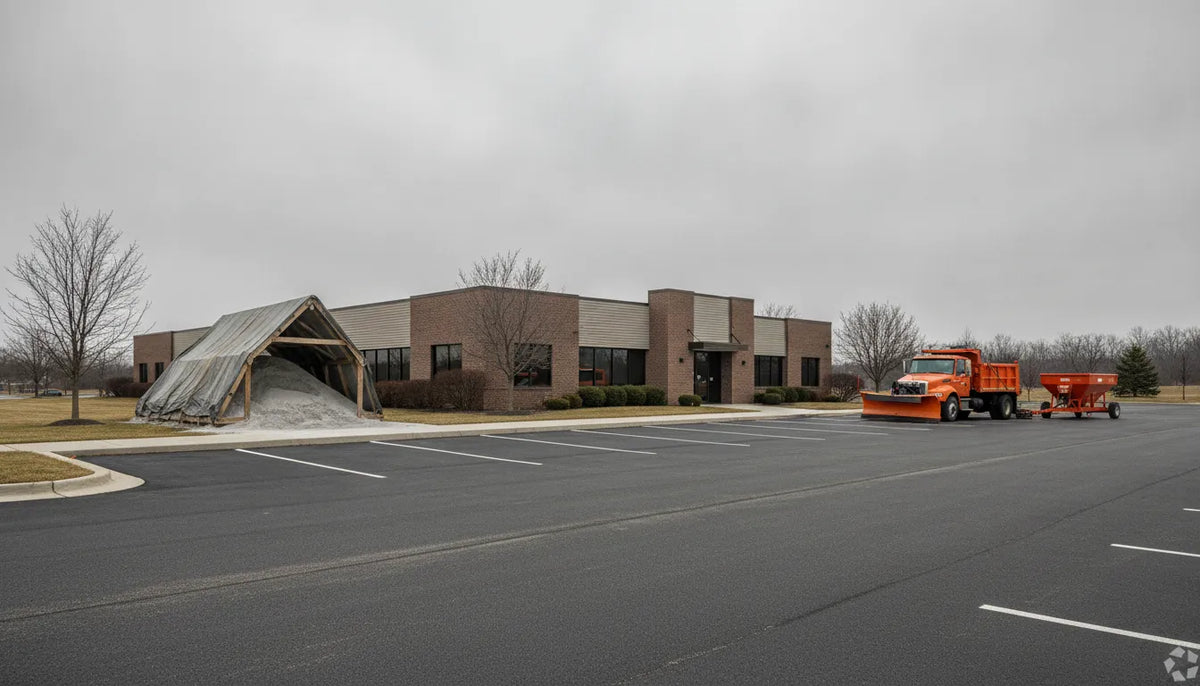
Winter readiness is easier to manage when a property plan is built before the first storm, not while entrances, loading areas, and travel lanes are already compromised. The right starting point is a clear picture of the site, its highest-priority areas, the materials it may require, and the people responsible for decisions.
Request a commercial winter planning quote from Sagamore Companies
For commercial snow removal ohio planning, identify pedestrian and vehicle routes, drainage points, loading zones, storage needs, access constraints, and the level of snow and ice service to request. Availability and scope still depend on the service location, dispatch limits, inventory, weather, and jobsite conditions.
That preparation also helps separate a seasonal project-service request from a bulk salt or deicer purchase. Before contacting a provider, walk the property and document the conditions that will shape the work, from entrances and sidewalks to fire lanes, parking aisles, and delivery access.
What Should Ohio Commercial Properties Plan Before Winter?
A useful winter plan starts with a clear picture of the property, not a generic request for snow service. Before contacting a provider, assemble a site map and mark the areas that must remain usable for people, vehicles, deliveries, and emergency access. This gives everyone the same working reference when conditions change.
Map the property and priority zones
Identify building entrances, accessible routes, stairs, ramps, sidewalks, parking aisles, fire lanes, loading areas, dumpster locations, and any narrow turns or low-clearance points. Mark the zones that should be addressed first, along with areas where snow may be relocated without blocking traffic, drainage, visibility, or neighboring property. The scale of this work can be substantial. Ohio State University Landscape Services reports clearing more than 140 miles of sidewalks, over 40 miles of roadway, and more than 300 loading docks, which illustrates why route details matter on a large commercial site.
Note changes since last winter, including construction, new tenants, altered traffic patterns, temporary barriers, damaged pavement, and newly added equipment. Include storm drains and low areas on the map. Deicing materials can improve traction, but the EPA notes that salts may mix with stormwater and contribute to water-quality problems. Planning where material is applied, stored, and kept away from drainage paths is part of responsible site preparation.
Confirm access, ownership, and operating details
List the people responsible for approving work, opening gates, directing drivers, and communicating with tenants or facility staff. Include after-hours contacts if they are relevant to the property plan. Document access restrictions, security procedures, staging areas, loading schedules, and locations where vehicles cannot safely maneuver. Safe vehicle access and ground conditions should be assessed before dispatch, since weather and traffic can affect delivery.
Separate the service plan from the material plan. Seasonal snow and ice work is a quote-led project service, while salt and other products follow location and product selection through the store process. Sagamore identifies Northeast Ohio snow and ice work and road salt or calcium chloride among commercial and public-buyer needs, but service location, dispatch limits, inventory, and jobsite conditions still need confirmation. You can use the request a project quote route to share the map, priority zones, access notes, storage conditions, and responsible contacts. Keep a dated copy of the submitted information so changes can be compared throughout the season.
Commercial Snow Removal Ohio Property Managers Can Plan For
A workable winter plan starts with a defined scope, not a general request to "keep the property clear." Before requesting a quote, identify which parts of the site need attention, what conditions should change the plan, and how snow and ice should be handled when storage space is limited. This gives the provider useful information without assuming a fixed service frequency or emergency response commitment.
Define the areas that matter first
Separate priority zones from lower-priority areas. Priority zones may include main entrances, accessible routes, stairs, ramps, pedestrian crossings, fire lanes, loading areas, and the parking aisles used by employees, tenants, deliveries, or customers. Note whether snow should be pushed to designated areas, hauled away, or kept clear of drainage structures and sight lines. A simple marked property map can make these decisions easier to review.
Set practical snow and ice triggers
Ask how the proposed scope distinguishes snowfall from freezing rain, refreeze, packed snow, and isolated icy areas. Your quote request can identify the conditions that matter to your operation, but the final trigger language, visit expectations, and treatment decisions must be confirmed with the provider. Avoid assuming that a general plowing request automatically includes sidewalks, ice control, snow relocation, hauling, or post-storm cleanup.
Ice control also deserves its own line in the scope. Clarify whether the property needs material supplied, applied, or both, and identify where salt or other deicing material could be stored. Sagamore identifies road salt and calcium chloride among commercial and public-buyer needs in Northeast Ohio, but current availability and the operational scope should be confirmed for the specific job.
Include access and site conditions
Service planning depends on more than acreage. Provide information about gates, height restrictions, narrow drives, parked vehicles, loading schedules, slopes, pavement condition, drainage, and areas where equipment or delivery vehicles cannot safely travel. Safe vehicle access and ground conditions should be assessed before dispatch, while weather and traffic can affect delivery and site work. These details help determine whether the requested scope is practical for the address.
Commercial snow and ice work is a quote-led project service, separate from selecting a product through a store and checkout flow. Availability must be qualified by location, dispatch limits, inventory, and jobsite conditions. Sagamore serves Ohio markets, but service area and scope are not automatically confirmed for every address. For a provider-facing overview, see the Ohio commercial snow plowing page. This planning guide helps property managers prepare useful information for that conversation rather than repeat the service landing page.
When you request a quote, include the property address, a marked map, priority zones, snow relocation preferences, ice-control needs, access restrictions, storage considerations, expected users, and the timing that matters to your operation. Then ask which parts of the requested scope are available for your location and what conditions could change the plan.
Which Areas and Risks Should a Winter Plan Cover?
A useful winter plan maps the property by risk, not simply by square footage. Start with the routes people use first, then account for vehicle movement, business-critical access, and the way meltwater leaves the site. This makes it easier to define priorities for commercial snow removal in Ohio without assuming every area requires the same treatment.
People and pedestrian routes
Identify each main entrance, secondary entrance, sidewalk, crosswalk, ramp, stair approach, and accessible route. Note areas where employees, customers, tenants, or visitors naturally gather, including queuing areas and paths between parking aisles and doors. Mark slopes, shaded pavement, low spots, and transitions where compacted snow or refreezing may create a traction concern. Deicing materials are commonly used on sidewalks, parking lots, and roadways to reduce ice buildup and improve traction for pedestrians and vehicles, according to the EPA's deicing guidance.
Vehicles and emergency access
Include parking aisles, drive lanes, intersections, entrances and exits, delivery approaches, and fire lanes on the site map. Record clearance constraints, turning areas, loading dock approaches, and any location where pushed or piled snow could narrow circulation. A plan should also show where snow can be placed without blocking sightlines, drains, pedestrian routes, or vehicle access. Conditions can change during a storm, so safe ground conditions, vehicle access, traffic, and weather should be assessed before a delivery or other dispatch.
Operations and loading areas
Loading docks deserve their own priority because a blocked approach can interrupt deliveries even when the rest of a parking lot appears usable. Include dock doors, receiving areas, employee entrances, waste handling areas, and service gates. Ohio State University Landscape Services describes clearing more than 140 miles of sidewalks, over 40 miles of roadway, and more than 300 loading docks, illustrating how a large property can contain many separate winter routes. Use that scale as a planning reminder, not as a performance benchmark.
Drainage and sensitive landscaping
Mark storm drains, catch basins, drainage channels, planted beds, turf edges, trees, and water-adjacent areas. Snow piles and deicer storage or application should not be planned without considering where salt-laden meltwater will flow. The EPA explains that salts lower the melting point of ice, but can mix with stormwater and contribute to water-quality problems. That makes drainage part of both safety and environmental planning. Review likely runoff paths, protect sensitive landscaping where practical, and ask a qualified provider to discuss material handling and site conditions before finalizing the scope.
How Should You Plan Bulk Salt and Deicer Supply?
Salt planning is part of a broader winter access plan. The right material depends on the property, the areas that must remain usable, how the material will be handled, and what storage and delivery conditions the site can support. For Northeast Ohio commercial and public buyers, Sagamore identifies road salt and calcium chloride as needs that require operational confirmation. Availability depends on the service location, inventory, dispatch limits, and jobsite conditions.
Start by identifying whether the site needs bulk supply, bagged material, or a combination. Keep product selection separate from a snow or ice service request: material purchasing follows location and product qualification, while seasonal services are quote-led project work. The bulk salt and deicer options page can help frame that conversation.
| Option | Use considerations | Handling and storage | Questions to qualify |
|---|---|---|---|
| Rock salt | Sodium chloride is the most common road-deicing substance. It may suit buyers planning routine treatment of parking areas, drives, roadways, or pedestrian routes, subject to site and application requirements. | Confirm the available storage area, equipment access, material protection, and a plan for keeping the product contained during handling. | What areas require treatment? What quantity and delivery format fit the site? Can a delivery vehicle reach the storage location safely? |
| Calcium chloride | Evaluate it as a site-qualified alternative or complement to other deicers rather than assuming one material fits every property. Selection should reflect the surface, operating needs, and application plan. | Ask how the material will be received, kept dry and secure, moved to the application point, and separated from incompatible materials. | What site conditions influence material selection? Who will apply it, and what handling practices and storage capacity are available? |
| Bagged material | Bagged product can be useful where demand is segmented, storage is limited, or crews need a portable format for selected entrances and walkways. | Plan a dry, accessible storage area and a method for moving bags without obstructing exits, loading areas, or pedestrian routes. | How much can the team safely stage? Which locations need portable supply? Does the order need store or delivery qualification? |
| Other site-qualified options | Consider a blended or alternate approach only after reviewing the property, surfaces, priority zones, environmental sensitivities, and application responsibilities. | Document containment, runoff controls, access, and separation from landscaping or drainage-sensitive areas before material arrives. | What does the supplier recommend for this site, and what assumptions about weather, traffic, inventory, and application still need confirmation? |
Deicing materials are used on sidewalks, parking lots, and roadways to reduce ice buildup and improve traction, but the material can mix with stormwater and create water-quality concerns. EPA guidance supports planning for both application and storage, not simply ordering more product. Confirm the delivery route, safe vehicle access, ground conditions, storage location, and responsible contact before scheduling. Weather and traffic can affect delivery conditions, so a site-specific review is more useful than a universal quantity or performance promise.
What Makes Salt Storage Safer and More Reliable?
Salt planning does not end when material reaches a commercial property. Storage conditions, loading access, and the delivery area can affect how safely a crew handles the material and whether it is ready when winter conditions change. A practical plan should account for the site, the material, and the movement of vehicles before the first delivery is scheduled.
Protect the material and control runoff
Covered storage is generally preferable to leaving bulk deicing material exposed to rain and snow. A roof or other appropriate cover can help limit moisture, preserve workable material, and reduce the chance that dissolved salt leaves the storage area. The storage surface and surrounding drainage should also be reviewed. The U.S. Environmental Protection Agency notes that salts are soluble and can mix with stormwater, creating water-quality concerns. That makes runoff control an operating consideration, not just a housekeeping detail.
Keep salt away from storm drains, surface water, and areas where meltwater flows directly across the property. Inspect nearby drainage paths before winter and after major precipitation. Where more than one deicing product is stored, separate materials clearly so the intended product can be loaded and applied without confusion. Keep incompatible materials, waste, and ordinary landscape supplies out of the active storage area.
Make loading and handling predictable
Storage should leave enough room for the equipment and vehicles that will load, unload, or distribute the material. Review turning space, overhead clearances, slopes, lighting, pedestrian conflicts, and the condition of the driving surface. A pile or storage bay that is technically accessible may still be impractical if trucks must reverse through a crowded loading area or cross a route used by employees and customers.
Mark the intended loading point and identify who can authorize access. Remove avoidable obstructions before delivery, and communicate any gates, time restrictions, construction zones, or shared-driveway concerns. Safe vehicle access and ground conditions need to be assessed before dispatch because weather and traffic can affect delivery conditions.
Review inventory before the next storm
Track the material on hand, the type of product, the area it is intended to serve, and the rate at which the property normally uses it. Sodium chloride, commonly called rock salt when used for road deicing, is the most common road-deicing substance, according to the EPA. The right inventory decision still depends on the property, application plan, weather, storage capacity, and operational requirements.
Before requesting more material or a winter-service quote, confirm the delivery address, storage location, access route, approximate quantity, and any site restrictions. Product purchasing follows a location and product selection process, while seasonal snow and ice services are quote-led. Availability, inventory, dispatch limits, and jobsite conditions should be confirmed for the specific property rather than assumed from a general service area.
What Should You Include in a Commercial Winter Quote?
A useful quote request gives the service team enough context to understand the property, the winter risks, and the materials or work you may need. For commercial snow removal in Ohio, describe the site as it operates in winter rather than relying on a property name alone. Availability still needs to be confirmed by service location, dispatch limits, inventory, and jobsite conditions.
- Site address: Provide the complete street address, including the municipality and ZIP code. If the work covers more than one property, list each address separately so service-area and dispatch considerations can be reviewed.
- Property map: Attach a current site plan, aerial image, or marked property map when available. Identify drives, lots, sidewalks, loading areas, entrances, drainage points, and locations where snow or salt may be placed.
- Priority zones: Mark the areas that must receive attention first, such as public entrances, fire lanes, accessible parking, delivery routes, steep grades, and pedestrian connections. Explain which areas are lower priority if conditions require sequencing.
- Vehicle access: Describe gates, overhead clearances, turning limits, narrow lanes, weight restrictions, and any obstacles that could affect equipment or material delivery. Safe vehicle access and ground conditions must be assessed before dispatch.
- People and users: Note who uses the property, including employees, tenants, customers, residents, students, visitors, delivery drivers, or municipal crews. Include operating hours, shift changes, and peak arrival or departure periods that affect access planning.
- Snow and ice scope: Explain whether you are seeking snow clearing, ice treatment, plowing, hauling, sidewalk work, or another defined service. Share the surfaces involved and any known drainage or refreeze concerns instead of assuming every area has the same requirements.
- Salt needs: Identify whether you need treated salt, road salt, calcium chloride, or another material, and where it would be used. Product availability and suitability depend on the location, inventory, application needs, and site conditions.
- Storage: State whether the property has a covered or designated place for salt, equipment, or temporary snow placement. Include access details and any restrictions on where materials can be stored.
- Timing: Share the season or project period, preferred planning date, operating constraints, and any weather-sensitive considerations. Weather and traffic can affect delivery, so timing should be treated as a planning input rather than a guaranteed response window.
- Contact: Provide the decision-maker's name, role, email, and direct phone number. A clear contact route helps resolve questions about the map, scope, access, and approval process.
Seasonal snow and ice work is a quote-led project service, not a standard product checkout. You can review commercial snow and ice services and contact Sagamore for project qualification. If you are purchasing a product rather than requesting winter service, use the location and product selection flow; delivery eligibility and charges are confirmed by location and checkout.
How Do You Prepare for Seasonal Service Changes?
A winter plan should be updated when site conditions, access, tenants, contractors, or material needs change. Treat each storm and service period as a source of useful site information rather than assuming last season's plan still fits.
Document what changed after a storm
Record where snow accumulated, which entrances or pedestrian routes became difficult to use, and whether loading areas, fire lanes, drains, or salt-storage areas were obstructed. Add dated photographs and notes about damaged curbs, pavement, signs, landscaping, gates, lighting, and other features that may affect the next service decision. Keep invoices, delivery records, work orders, and incident reports with the property file. This documentation helps property managers distinguish a recurring site issue from a one-time weather problem.
Review inventory, access, and site conditions
Before the next period of winter weather, compare remaining salt or other materials with the areas that need treatment. Check storage space, moisture exposure, containment, and equipment access. A material order or delivery is not the same as a snow and ice service request, so define whether the need is product supply, delivery, placement, or project work.
Reconfirm gates, clearance limits, staging areas, traffic patterns, tenant parking, and any construction or landscaping changes. Safe vehicle access and ground conditions should be assessed before dispatch, since weather and traffic can affect delivery. Availability also depends on service location, dispatch limits, inventory, and jobsite conditions.
Communicate the updated plan
Share revised priority areas, access instructions, contact information, and site restrictions with tenants, contractors, security staff, and property representatives. Ask contractors to report changed work zones or blocked routes before service is requested. When requesting a quote for commercial snow removal in Ohio, provide the property location, priority zones, access details, timing needs, material requirements, and any recent site-condition notes. Sagamore treats seasonal snow and ice work as quote-led project service, so current scope and availability should be confirmed for the specific address.
Frequently Asked Questions
How far in advance should a commercial property plan for winter service?
Start before the first storm by documenting the property map, priority zones, access routes, storage area, contact list, and expected snow, ice, and salt needs. Early planning gives a provider enough information to review location, dispatch limits, inventory, and jobsite conditions before discussing a qualified scope.
Do commercial snow removal companies perform snow removal in-house?
Some providers perform work with their own crews and equipment, while others may use qualified partners for part of a project. Ask who will handle plowing, snow relocation, ice control, communication, and site decisions. For any Ohio request, confirm the provider's current operational model and the specific address rather than assuming in-house service or statewide coverage.
How should a business choose between rock salt and calcium chloride?
Selection depends on the site, weather conditions, application plan, storage, handling, and environmental considerations. Sodium chloride, commonly called rock salt, is the most widely used road-deicing substance, according to the EPA. Ask a qualified supplier to review the intended use and current availability instead of choosing solely by product name.
What information is needed for a commercial snow and ice quote?
Provide the service address, property map, entrances, sidewalks, ramps, loading areas, fire lanes. Parking areas, drainage concerns, access restrictions, storage details, timing needs, and the person responsible for decisions. Snow and ice work is quote-led, while bulk products follow location and product selection through checkout. Confirm delivery eligibility, charges, inventory, and safe vehicle access before scheduling.
Ready to Plan Your Ohio Winter Services?
A clear winter plan helps align priority areas, salt needs, delivery considerations, and site access before conditions change. If your property, crew, or buying team needs qualified guidance for commercial snow and ice planning, bulk salt, or delivery, share the location and project details with Sagamore. Request a project quote to contact the team and discuss the scope, availability, and next qualification steps for your Ohio site.
