
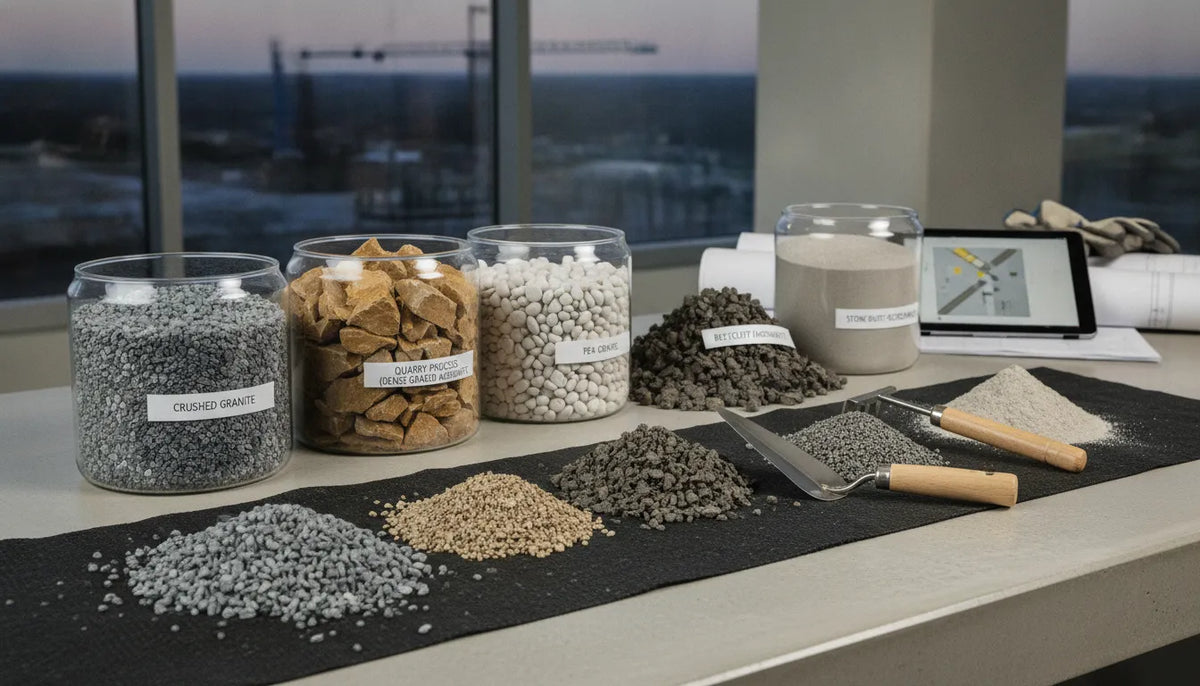
A driveway base, a drainage trench, and a concrete mix all rely on aggregate, but they don’t all need the same stone. Choosing the wrong product can lead to poor compaction, slow drainage, or extra work on site. Understanding crushed stone types and uses helps you match the material to the job, whether you’re preparing a residential path or coordinating a commercial build. Stone size, gradation, fines, and rock type all affect performance. This guide explains how common options differ, where contractors use them, and what to confirm before ordering. You’ll also find practical tips for estimating quantities and planning delivery.
Key Takeaways
- Choose aggregate for its purpose: Compacted blends suit many bases, while clean stone with fewer fines allows water to drain.
- Check project specifications: Confirm the required stone type, size, gradation, and quantity before placing an order.
- Plan delivery and placement: Share site access details with your supplier, and ask about slinger-truck service for hard-to-reach areas.
What Is Crushed Stone, and How Is It Made?
Crushed stone is aggregate made by breaking larger rocks into smaller pieces and sorting them by size. Contractors use it for road and driveway bases, drainage, concrete, and other construction work. Its angular pieces can interlock when compacted, which helps create a stable surface. The right material depends on the job, the required size, and how the aggregate needs to perform.
Quarry, crush, and screen the stone
Crushed stone begins as rock extracted from a quarry. Crushing equipment breaks the rock into smaller pieces, then screens separate the material into size ranges. This process gives suppliers aggregates suited to different jobs, from larger stone for drainage to smaller blends for compacted bases.
Screening also helps produce consistent material. Concrete mixes, for example, require aggregate that meets project specifications, while a driveway base may call for a blend of sizes that compacts firmly. As Wigan Aggregates explains in its guide to crushed stone and gravel, crushing and screening distinguish crushed stone from naturally occurring gravel.
How size, gradation, and fines affect performance
Aggregate size refers to the dimensions of individual pieces. Gradation describes the range of sizes in a load. A well-graded blend contains different sizes that fit together as the material is compacted, making it useful for a firm base. Clean stone, with few fine particles, has more open space between pieces and allows water to drain through.
Fines are small particles created during crushing, including stone dust. They can help a base bind and compact, but excess fines can slow drainage. The best mix depends on the application: a driveway base needs support and compaction, while a drainage layer needs room for water to flow. Kynock’s guide to aggregate selection explains how size and gradation affect common uses. Check project specifications before ordering.
Compare crushed stone, gravel, and manufactured stone
Crushed stone and natural gravel differ in how they form. Crushed stone is mechanically produced and typically has angular edges that can interlock under compaction. Natural gravel is shaped by water and weather over time, leaving pieces that are usually smoother and rounder. It can work well for decorative areas and paths where a softer surface is preferred.
“Manufactured stone” can mean different materials, so confirm what a supplier is describing. The term may refer to processed aggregate, such as crushed rock or recycled concrete, or to decorative building products that are not loose aggregate. Before ordering, ask about the material’s source, size, gradation, and intended use. Matching those details to the project helps ensure the stone performs as expected.
What Are the Main Types of Crushed Stone and Their Uses?
Crushed stone is sold in different rock types and gradations, and each product suits particular jobs. The rock’s strength and durability matter, but so do stone size, the amount of fine material, drainage needs, and how the aggregate will be placed. A road base, a concrete mix, and a drainage bed may all call for different products.
Start with the project plans and identify the expected loads, required gradation, and drainage requirements. If the plans don’t specify a product, check with the project designer or contractor before choosing a substitute. Then confirm what your local supplier has available. For contractors, coordinating material selection and delivery ahead of time can help keep site work on schedule.
Use limestone for road bases and concrete
Limestone is a widely used crushed stone for construction. It’s used in road bases, ready-mix concrete, and railway projects. For a driveway or road, a suitable limestone gradation can create a stable layer beneath the finished surface. In concrete, the aggregate must meet the mix design and project requirements, so don’t assume every limestone product is interchangeable.
Before ordering, check the required size range and whether the product contains fines. These details affect how the stone compacts and performs. Share the project specifications with your supplier and ask which limestone products are appropriate for the job. Limestone aggregate serves a range of construction uses, but the right gradation depends on the application.
Use granite for demanding applications
Granite is known for its strength and durability, making it a useful option for applications that face heavy loads or demanding conditions. Depending on its gradation and the project design, granite aggregate may be used in road construction, hard-wearing surfaces, and other structural work. It’s worth considering when durability is a priority.
The rock type alone doesn’t determine whether an aggregate meets a project’s needs. Confirm the required size, gradation, and applicable specifications with your engineer or supplier. Granite may also cost more or be less available than local alternatives, so compare delivered prices before deciding. For projects with specific performance requirements, granite’s durability makes it a useful option to discuss with your aggregate supplier.
Use basalt for strength and wear resistance
Basalt is a dense, durable rock used in road paving, concrete aggregate, and masonry. Its strength and resistance to wear can make it suitable for surfaces that see regular traffic or exposure to tough conditions. As with other stone types, the intended use and aggregate size determine whether a particular basalt product is a good fit.
Before ordering, check the project specifications and ask which gradations are available. A product suited to paving may differ from one intended for concrete or a compacted base. Availability varies by location, which can affect delivery distance and cost. If you’re comparing materials for a high-use area, ask your supplier to confirm the product’s size and intended applications. Basalt’s construction uses include paving, concrete, and masonry.
Use recycled concrete for suitable bases and fill
Recycled concrete aggregate is made by crushing recovered concrete into usable material. It can be a practical choice for driveway bases, fill, and other applications where project specifications allow recycled aggregate. Reusing concrete can also reduce demand for newly quarried stone, making it an option to consider when sourcing materials.
Recycled products can vary depending on their source and processing. Ask about gradation, quality controls, and any limits on use before placing an order. Some projects require virgin aggregate or specific test results, so check the plans and local requirements first. For a driveway or base, confirm that the recycled material can meet the expected load and compaction requirements. Recycled concrete aggregate can be used as a base material when the project allows it.
Choose by gradation: crusher run, clear stone, stone dust, or surge rock
Gradation describes the range of stone sizes in a product and whether it includes fines. Crusher run combines several sizes, often with fines, to create a material that compacts into a firm base for driveways and walkways. Clear stone is screened to remove most fine material, leaving spaces between pieces that allow water to drain. Stone dust consists of fine particles produced during crushing and can help with leveling in suitable applications.
Surge rock is a larger, coarse product used for heavy fill, drainage, or erosion control when the design calls for large stone. Product names and sizes can vary by supplier, so confirm the specifications before ordering. Review the differences between crusher run, clear stone, and stone dust, then ask your supplier about available surge rock sizes for your project.
How availability and specifications affect stone selection
The right stone must meet the project requirements and be available in the quantity you need. Quarries crush and screen rock into different size ranges, but product names, gradations, and stock can vary between suppliers. Check the plans for the required aggregate type and size. If they don’t name a product, ask the project engineer or contractor before choosing an alternative.
Consider delivery distance, scheduling, and placement, too. A local aggregate may be more practical if it meets the specification, while a specialty product may need more lead time. Share the intended use, required quantity, and site access details with your supplier before arranging delivery. Quarry screening and sizing help match stone to an application, while the project specifications guide the final choice.
Where Do Projects Use Crushed Stone?
Crushed stone serves as a base, drainage material, or finished surface on construction and landscaping projects. The right type depends on how much support the area needs, whether water must drain through it, and how the surface will be used. Check project specifications before ordering, particularly for structural work and concrete or asphalt mixes.
Roads, driveways, and parking areas
Crushed stone is often placed beneath roads, driveways, and parking areas to create a firm base. Angular pieces can interlock when compacted, helping the layer support vehicles and the pavement or surface above it. A blend of stone sizes, including some fines, can fill gaps and compact into a stable base.
The required stone grade and depth depend on soil conditions, expected traffic, and the type of surface. A driveway that regularly carries delivery trucks, for example, may need a different base than a lightly used path. A blend of crushed stone and stone dust is commonly used where firm compaction matters. Confirm the material and base depth with your contractor or project specifications before arranging delivery.
Concrete and asphalt
Crushed stone is used as aggregate in many concrete and asphalt mixes. The size and gradation of the aggregate affect how a mix performs, so the material needs to meet the mix design and project requirements. Contractors and mix designers select materials for the intended application, such as a sidewalk, foundation, roadway, or parking area.
Quarried stone is crushed and screened into different sizes, from larger pieces to fine material. This range lets suppliers provide aggregate suited to specific construction needs. Screened stone in different sizes can serve different mix designs, but the specified aggregate should guide your order. If you’re coordinating material for a pour or paving job, confirm the requirements with the contractor or mix supplier first.
Foundations, utility trenches, and backfill
Crushed stone can form a stable base beneath foundations, walkways, retaining walls, and other structures. A well-graded blend can compact into a firm layer that supports the structure. Stone may also be used around utility lines or as backfill, but the right product depends on the soil, drainage needs, pipe material, and project specifications.
Choose trench or foundation material based on its intended role, not appearance alone. The plans may call for compactable stone, clean stone, or a specific backfill product. A blend of crushed stone sizes is often used where a firm base is needed. Follow project drawings and guidance from the contractor or engineer, especially around utilities and load-bearing areas.
French drains, retaining walls, and erosion control
Drainage systems often use clean, open-graded crushed stone with little or no fine material. The spaces between the stones allow water to move through the layer. Depending on the design, this material may surround a perforated drainpipe, sit behind a retaining wall, or be placed alongside a foundation.
Crushed stone can also form part of an erosion-control plan, though the right solution depends on the slope, soil, and volume of water. Clean stone is commonly used in French and foundation drains and behind retaining walls. Check the design for the required stone size and placement. Fabric, pipe position, and finished grading all affect drainage, so coordinate these details with the contractor before the work begins.
Paths, patios, garden beds, and decorative surfaces
Crushed stone can provide a practical surface for garden paths, patios, and outdoor gathering areas. Finer material may compact into a more even finish, while larger pieces create a looser, more textured look. Consider how people will use the space: a frequently used walkway calls for a different surface than a decorative garden bed.
For paths and patios, a compactable base can help limit shifting and uneven spots. Decorative areas may call for a consistent stone size or color instead. Pea gravel is rounded rather than crushed, but it’s another option for paths and walkways. Pea gravel is commonly used for foot-traffic areas. Prepare the ground before placing stone, and consider edging to help keep the material in place.
Should You Choose Crushed Stone or Natural Gravel?
Crushed stone and natural gravel can both suit construction and landscaping, but their shape and gradation affect how they perform. Crushed stone’s angular pieces can lock together when compacted, while natural gravel is generally smoother and rounder. Choose based on the job’s load, drainage needs, surface appearance, and how much maintenance you’re prepared to do.
Choose angular crushed stone for stable, interlocking bases
Crushed stone is made by breaking larger rocks into smaller pieces, which gives it angular edges. When compacted, those edges can interlock to form a firm, stable layer. This makes crushed stone a common choice for driveway and parking-area bases, as well as preparation beneath concrete and paving. Crushed stone guidance explains why aggregates with fines are often used where firm compaction matters.
For a base carrying vehicles or equipment, ask which size and gradation suit the expected load and site conditions. A blend of stone sizes can compact more tightly than uniform, clean stone, but the right specification depends on the project. Prepare the ground properly, place the aggregate in manageable layers, and compact it as required. These steps help the base perform as intended.
Choose rounded gravel for comfortable paths and decorative finishes
Natural gravel usually forms as water wears down stone over time, leaving smoother, rounded pieces. That shape can feel more comfortable on garden paths and works well in planting beds, borders, and other decorative areas. Gravel also comes in a range of sizes and colors, so consider how it will look beside nearby plants, paving, and structures.
Rounded gravel can shift more than angular crushed stone, especially under tires or on slopes. For paths, edging can help keep the material in place. If the surface will get regular foot traffic, consider stone size and how it feels to walk on. Gravel selection advice can help you compare options for different uses.
How gradation and fines affect drainage and compaction
Gradation refers to the range of particle sizes in an aggregate. A mix of sizes, including fines, can fill gaps as the material is compacted and create a firmer surface. This can work well for a base, but the smaller particles may reduce the open spaces that allow water to flow through.
Clean, larger stone is often a better fit where drainage is the main priority. A finer or mixed-size product may be more suitable when you need a level, compactable surface. The best choice depends on the required surface, soil, and drainage plan. Check the specified size and gradation before ordering, especially when a contractor’s plans or local requirements call for a particular aggregate.
Compare load support, water flow, appearance, maintenance, and cost
Start with the demands of the project. A driveway or base beneath concrete needs suitable support and compaction. A drainage area needs enough open space for water to pass through. Crushed stone is often selected for firm bases, while clean, open-graded stone is used where water flow matters. Rounded gravel can work well in paths and landscape areas, though it may need occasional raking or replenishment.
Then consider appearance, comfort, and delivered cost. Natural gravel’s smoother texture and varied colors may suit a visible garden area, while crushed stone has a more rugged finish. Prices depend on stone type, size, availability, and delivery distance, so compare quotes for the quantity you need. Since the materials do not perform the same way in every application, compare their properties against the project requirements before choosing.
Layer aggregates for support and drainage
Some projects need a stable base as well as a path for water to drain. Different aggregate layers can serve these separate purposes: a compactable blend may provide support, while clean, larger stone can be used in a drainage layer. The right materials, layer depths, and order depend on the soil, expected load, grading, and project specifications.
Before placing stone, prepare the area and confirm the required elevations and direction of water flow. Avoid assuming that one product will offer both tight compaction and maximum drainage. Fines help fill gaps, but they also reduce open space between stones. Ask your supplier or contractor which aggregate suits each layer, and follow project plans for filter fabric or other system components where specified.
Related products


Made from durable, natural stone for long-lasting performance.
View productHow Do You Choose Crushed Stone for Your Project?
Choose crushed stone based on the work it needs to do. A driveway that carries trucks needs a different aggregate from a garden path, while a drain needs stone that allows water to move through it. Consider the load, compaction, drainage, appearance, and site conditions before ordering. If you are working from plans, use their specifications as your starting point.
Match aggregate size and type to the load and application
Start by identifying how the stone will be used and what it needs to support. A driveway or parking area needs a stable base for vehicles, while a drainage trench needs stone that leaves room for water to flow. Concrete and asphalt projects may call for specific aggregate sizes or properties, so check the plans before selecting a product.
Particle size matters, but so does gradation, or the range of sizes in the material. A blend of sizes can compact into a firm layer, while clean stone with fewer fine particles leaves more open space. As Kynock’s guide to choosing gravel notes, materials suit different applications. Share the intended use and expected load with your supplier to help narrow down the options.
Choose a compactable blend for firm bases
For a base beneath a driveway, patio, foundation, or concrete installation, consider crushed stone with a range of particle sizes and some fine material. Smaller pieces fill the spaces between larger ones, helping the aggregate lock together as it is compacted. The result is a firm layer that supports the surface above it.
Crusher run is one common example, though product names and specifications can vary by supplier. Ask which sizes are included and confirm the material fits your project plans. The Wigan Aggregates guide to crushed stone describes mixed-size stone with fines as a suitable option for firm bases. Placement matters too: follow the specified layer depth and compaction requirements, or ask your contractor what the job calls for.
Use clean, open-graded stone for drainage
When water needs to flow through an aggregate layer, choose clean stone with little or no fine material. Often called clear stone, this open-graded product leaves spaces between pieces so water can pass through. It is commonly used in French and foundation drains, as well as behind retaining walls.
A compactable blend may not suit these applications because fine particles can fill the gaps and restrict water flow. Check the required stone size and ask whether the product has been screened to remove fines. Kynock’s overview of clear stone explains its use in drainage projects. For work near a building or retaining wall, follow the design details and confirm that water has a clear path to an outlet.
Consider surface feel, appearance, soil, and site drainage
Consider how the finished surface should look and feel. Angular crushed stone has a rougher texture and can interlock under pressure, while rounded stone may feel more comfortable beneath your feet on paths or in garden areas. Color and stone type also shape the final appearance, so ask to see a sample if the aggregate will remain visible.
Look at the ground beneath the project, too. Soft or wet soil may need extra preparation or a specific base design. Check where rainwater flows and whether it collects in low spots. These conditions can affect both the aggregate choice and the work needed before placement. For a larger project, ask your contractor or supplier to review the site and confirm that the selected stone fits the intended use.
Check specifications and estimate the quantity
Before ordering, review the project specifications for stone type, size, gradation, and any requirements for recycled material. Product names can differ among suppliers, so compare the stated size range and intended use instead of relying on the name alone. Your supplier can help identify a suitable product and point out details to confirm with your contractor.
To estimate the amount, measure the area’s length and width, then multiply by the planned depth. Keep the measurements in the same units, and ask your supplier to convert the result into the quantity used for ordering. Account for compaction and site conditions where applicable. When requesting a quote, share your measurements, project type, and delivery location. Confirm that trucks can access the unloading area, or ask whether a slinger truck can place material in a hard-to-reach spot.
What Are the Benefits and Trade-Offs of Crushed Stone?
Crushed stone can provide a stable base, support drainage, or create a finished landscape surface. Its angular pieces can lock together when compacted, making it a practical choice for many construction and landscaping projects. But no single type or size works everywhere. The stone’s gradation, the amount of fine material, and the conditions at the site all affect how it performs.
Before ordering, consider what the stone needs to do, how much weight it will support, and whether water should drain through it or run across the surface. Also account for delivery distance and access to the placement area. A product that suits a compacted driveway base may be a poor fit for a decorative path or drainage trench.
Get durability and support with the right aggregate
Crushed stone is produced by breaking rock into smaller pieces, which gives it angular edges. When the right blend is compacted, those pieces can interlock to create a firm base for driveways, parking areas, walkways, and other surfaces that carry regular traffic. The rock type and gradation still matter: material selected for a driveway base may not suit a drainage trench or finished path.
Start with the project’s expected load, soil conditions, and drainage needs. For work with engineering, building, or municipal requirements, use the aggregate specified in the plans. Choosing by appearance alone can lead to a surface that does not perform as intended. Wigan Aggregates’ crushed stone guide explains how stone pieces and fines can work together in applications that require firm compaction.
Use crushed stone for construction and landscaping
Crushed stone has a role in both structural work and landscaping. Contractors use appropriate grades beneath concrete, paving, and foundations. Homeowners and landscape crews may choose it for paths, patios, garden borders, or around drainage features. As a base layer, well-selected stone can help provide an even surface and support the material installed above it.
The trade-off is that one grade may not serve every purpose on a project. A blend that compacts into a firm base may restrict water flow, while clean, larger stone can support drainage but feel uneven underfoot. Decide whether the stone will serve as a base, a drainage layer, or the visible finish before selecting a product. If the work includes concrete installation, check the project requirements with your contractor or supplier before ordering.
Consider cost, local availability, and delivery distance
The delivered cost of crushed stone depends on more than the price per ton. Product type, quantity, quarry location, travel distance, and access at the delivery site can all affect the total. A locally available grade may be a practical option for a large job, provided it meets the project specifications.
Ask suppliers which sizes and blends they carry, whether they can supply the amount you need, and how they handle delivery. Quarries crush and screen rock into different sizes, with material supplied to job sites, concrete plants, or distributors. Kynock’s aggregate selection guide offers a helpful overview of how project needs influence material choice. For a tight site or a hard-to-reach placement area, ask whether a slinger truck can deliver stone more precisely than a standard dump truck.
Compare maintenance and surface feel with natural gravel
Crushed stone and natural gravel may look similar, but their shapes affect how they feel and hold in place. Angular crushed stone can form a firm, interlocking surface when the grade is suitable and the material is compacted. Rounded gravel often feels more comfortable underfoot and can work well in decorative areas, though loose pieces may shift under traffic or on slopes.
Maintenance depends on the use and installation. A path may need occasional raking or material added, while a driveway can require repairs if water washes stone away or the ground settles. Consider how the surface should feel, how much traffic it will get, and whether you want a compacted or loose finish. Kynock’s comparison of aggregate options highlights drainage, compaction, stone size, and surface level as useful factors when choosing between materials.
Match gradation to the application
Gradation refers to the range of stone sizes in a product and whether it contains fine material. That mix affects how the stone settles, compacts, and allows water to pass through. A blend of sizes with fines can pack into a firm base. Clean stone with little or no fine material leaves more open space for drainage. Fine material may also help create an even surface for certain applications.
Choose the gradation according to the job each layer must do. A compactable blend can suit a stable base, while clean, larger stone may work better where water needs to flow. Check the product’s size range and composition rather than relying on a general label such as “stone” or “gravel.” Ask your supplier for the gradation and compare it with the project plans. Kynock’s guidance on stone sizes can help you weigh fine, mixed-size, and clean stone for different uses.
How Do You Plan Crushed Stone Delivery and Placement?
Plan delivery around the material, the site, and the work schedule. Before ordering, confirm that the truck can reach the unloading area and that crews know where the stone should go. Then check the project specifications and discuss aggregate options and delivery methods with your supplier. A little coordination can help prevent misplaced piles, extra handling, and delays on residential and commercial jobs.
Confirm access, unloading space, and placement needs
Check the truck’s route from the road to the unloading area. Note narrow gates, low branches, overhead wires, soft ground, steep slopes, and tight turns. Make sure there is enough room for the truck to stop and unload without blocking traffic or putting nearby structures at risk.
Tell your supplier where you want the stone placed, not just where the truck should arrive. Share site photos, measurements, and any restrictions that could affect access. Ask what kind of ground surface the truck needs and whether the unloading area should be level. For contractor jobs, coordinate delivery timing with the crew so the aggregate can be moved or installed without interrupting other work. Since stone availability can vary by region, it also helps to confirm the material and quantity early. The USGS overview of crushed stone provides background on this widely used construction material.
Use slinger-truck delivery for hard-to-reach areas
If a dump truck cannot reach the placement area, ask about slinger-truck delivery. A conveyor carries and directs aggregate into areas that may be difficult to access with a conventional truck, such as behind a building, across uneven ground, or over a barrier. This can reduce wheelbarrow work and help limit disruption to finished landscaping.
Before delivery, identify obstacles, overhead hazards, and areas that need to stay clear. Confirm the conveyor’s reach and the space required to position the truck with your supplier. Let the operator know where the stone should go and whether the placement area has any limits, such as a narrow trench or a protected surface. Coordinating the operator, site crew, and delivery timing helps ensure the material lands where it is needed.
Prepare the site and follow project specifications
Clear debris, equipment, and other materials from the placement area before the truck arrives. Check that the base is stable and that drainage will work as planned. If the stone will sit beneath a driveway, slab, or other structure, follow the project documents for excavation depth, material type, and compaction rather than relying on a visual estimate.
For commercial work, confirm the specified aggregate type and gradation with the plans or project engineer before ordering. A stone that looks suitable may not meet requirements for size, durability, or drainage. Mark utilities and protect nearby pavement, foundations, and landscaping, especially if the material will be placed close to existing features. Preparing the site in advance helps crews install the aggregate to plan and reduces the chance of last-minute changes.
Ask about aggregate sizes, recycled options, and delivery services
Ask which aggregate sizes and blends are available for your project. A compactable base, drainage layer, backfill, and finished surface may each call for a different material. If the plans allow recycled aggregate, ask whether recycled concrete is available and whether it meets the job’s requirements. The Federal Highway Administration’s guidance on recycled concrete aggregate describes its use in highway applications.
Confirm delivery details before placing your order, including truck type, load size, timing, and placement options. If the stone needs to be spread beyond the unloading point, ask whether slinger-truck service is available. Give your supplier the project location, access conditions, estimated quantity, and intended use. With those details, they can help you choose a practical material and delivery plan.
Frequently Asked Questions
What information should I have before ordering crushed stone?
Know how the stone will be used, the area and depth to cover, and any size or gradation listed in the project plans. Also share the delivery address and site access details with your supplier so they can recommend a suitable product and truck.
How do I choose between stone for a compacted base and stone for drainage?
A compacted base often needs a blend of sizes that can settle firmly together. A drainage layer usually needs cleaner stone with fewer fines, leaving room for water to pass through. Check the project specifications, or ask your contractor or supplier to confirm the right material.
Can recycled concrete replace quarried crushed stone?
Sometimes. Recycled concrete can work for bases or fill when the project allows it, but its quality and gradation may vary. Confirm that it meets the plans and any local requirements before ordering.
How can I estimate how much stone I need?
Measure the area’s length and width, then multiply by the planned depth to find its volume. Keep units consistent and ask your supplier to convert the result into the quantity they sell. For projects that require compaction, check whether the estimate should account for settling.
When should I consider slinger-truck delivery?
A slinger truck may help when stone needs to reach a spot that a standard dump truck cannot access easily. Share photos, obstacles, overhead clearances, and the intended placement area with the supplier so they can confirm whether the truck can safely reach it.
