
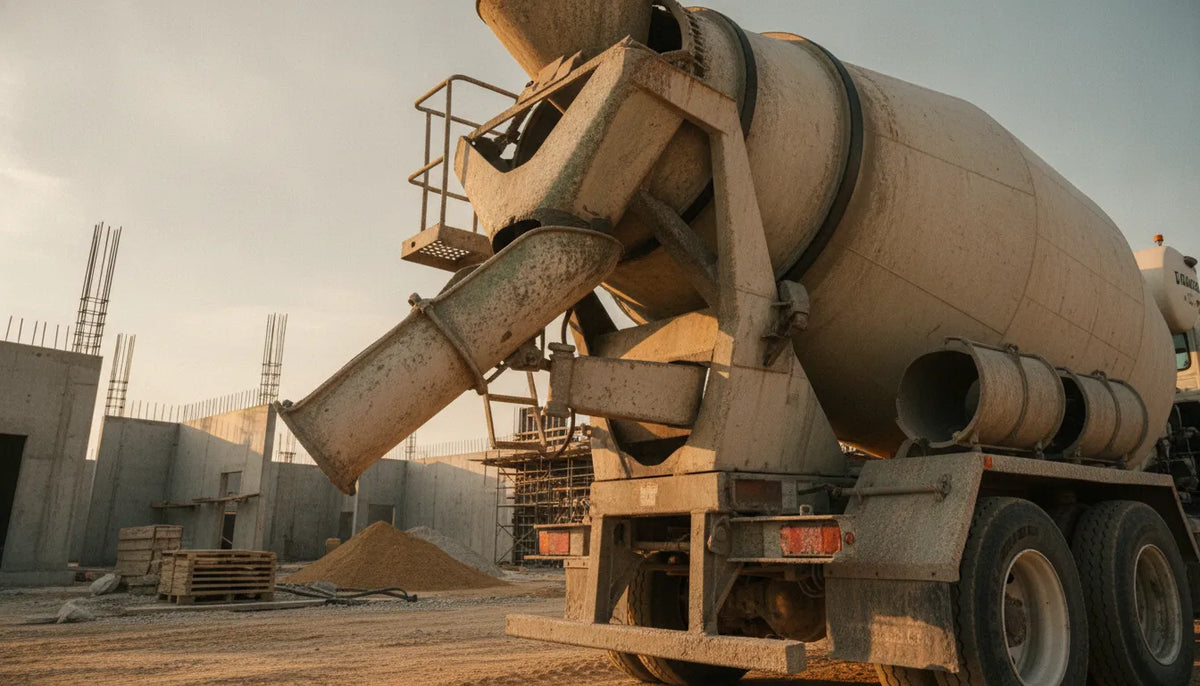
Flowable fill vs concrete is a use question, not a brand question. Concrete is the ready-mix product you specify when a slab, footing, or other element has to carry a design load. Flowable fill is a self-leveling cementitious mix for voids and backfill, and it is not a stand-in for that structural concrete. Sagamore Companies supplies ready-mix concrete from volumetric trucks in Northeast Ohio and the Charlotte area, and lists flowable fill as its own service for filling voids and backfilling. A quote still has to match the address, the plans, and the scope.
Call (330) 656-5720 to talk through a commercial concrete or flowable fill quote. Have the address, the intended use, and the project documents ready so the conversation stays on the right material.
Flowable fill vs concrete starts with the job
Start with what the material has to do after it hardens. If the element is a slab, footing, wall, pavement section, or other member with a specified strength, you are in concrete territory. If the job is to fill a void, bed a pipe, or replace compacted soil in a trench, flowable fill may be the material the plans call for.
The Federal Highway Administration describes flowable fill as a cementitious slurry of fine aggregate or filler, water, and cementitious material. It is used mainly as backfill instead of compacted earth. It can fill irregular excavations and hard-to-reach spots, including under and around pipes. It is self-leveling and hardens without compaction in layers. Other names include controlled density fill, controlled low-strength material (CLSM), lean concrete slurry, and unshrinkable fill.
That is a different job from ready-mix concrete. Concrete is batched to a mix design so it can meet a specified strength and perform in a formed element. Flowable fill is batched to flow, fill, and stay within a low strength range. Using one where the plans require the other creates a scope problem, not a shortcut.
On Sagamore's volumetric concrete page, flowable fill is listed beside line pump service, not inside a general "any pour" bucket. The page calls it self-leveling material for filling voids and backfilling. Large commercial pours, residential flatwork, and remote-site delivery sit on the concrete side of that same page. Read the labels the way the work is split.
Where each material belongs
Commercial buyers usually meet both materials on the same site, just not in the same role. A building pad might need structural concrete for footings and flowable fill for an abandoned utility or a tight backfill. Treating them as interchangeable mixes is how orders get written for the wrong yardage.
Uses that point to concrete
Concrete is the material when the drawing names a compressive strength, reinforcement, joint layout, or finish. Typical commercial uses include footings, slabs on grade, equipment pads, curbs, sidewalks, and pavement patches that are designed as concrete. Sagamore's Ohio volumetric page lists driveways, sidewalks, patios, foundations, slab repairs, curb work, and small commercial pours as common volumetric concrete uses. Those are examples of concrete work, not a promise that every one of them is available at every address.
Volumetric supply means the truck carries cement, aggregates, water, and admixtures separately and mixes them on site. Sagamore describes that as ready-mix concrete sold through volumetric trucks. It is a way to batch fresh concrete for the yards the crew actually places. It is not a different product from ready-mix, and it is not the same thing as flowable fill.
Uses that point to flowable fill
Flowable fill shows up where compaction is the hard part. FHWA's guidance centers on below-grade work such as utility trenches, where crews need low strength and easy placement. The mix is often designed so later excavation is still possible. Abandoned pipes, tanks, and odd voids are the same family of work: the goal is a complete fill, not a structural member.
Sagamore's own line for this service is narrow and useful. It is self-leveling material for filling voids and backfilling. If your note to the supplier says "void fill" or "trench backfill," say that plainly. If the note says "slab" or "footing," you are describing concrete. A future trench-only guide can go deeper on pipe bedding. This comparison only needs the boundary.
Strength and design are not interchangeable.
ACI, as cited by FHWA, defines flowable fill as a self-compacting cementitious material that is flowable at placement and has a compressive strength of 1,200 psi or less at 28 days. FHWA also notes that most current uses target 300 psi or less. Those figures describe the material class. They are not a mix you should paste into a purchase order without the project specification.
Structural concrete lives in a different range, and the number comes from the engineer, not from a blog. A 4,000 psi slab mix and a 150 psi excavatable fill can both leave a truck as a cementitious material. They are not substitutes. If the specification is silent, do not guess a strength to "make it close." Ask the design professional what the element is supposed to do.
Excavatability is the detail commercial owners care about later. A fill designed near the strength of the surrounding soil can be dug out when a utility has to be repaired. A fill pushed toward the high end of the CLSM range, or a real concrete mix placed in a trench, can turn a simple locate into a demolition job. The reverse mistake is just as costly. A low-strength fill under a slab or footing that was supposed to be concrete will not meet the design, no matter how neatly it flowed.
Sagamore can adjust volumetric concrete mix designs on site for strength, slump, air content, and setting time when the project calls for that. That flexibility belongs to the concrete mix the plans already name. It is not a license to turn flowable fill into structural concrete in the chute. Put the specified strength, or the specified fill class, in the quote request so the batch matches the document.
Compare the decision before you order
Use the table as a planning screen. It does not replace the specification, and it does not assign a price. Delivery, placement, and any installation labor are separate from the material conversation.
| Decision point | Flowable fill | Concrete |
|---|---|---|
| Primary job | Fill voids and backfill in place of compacted soil. | Build a formed element that carries a design load. |
| Typical commercial uses | Utility trenches, pipe bedding, abandoned lines, and odd voids. | Footings, slabs, pads, curbs, sidewalks, and designed patches. |
| Strength role | Low strength by design, often so it can be excavated later. | Specified compressive strength from the project documents. |
| Placement need | Must flow and self-level without layer compaction. | Must be placed, consolidated, and finished to the spec. |
| What to send for a quote | Void or trench dimensions, excavatable requirement, and access. | Mix or strength, quantity, finish, access, and schedule. |
If a row is unclear on your job, stop and mark it as a question for the quote. Do not average the two columns into one order. A commercial site can need both materials on the same day and still need two scopes.
Placement, access, and who does the work
Flowable fill earns its place because it moves. FHWA notes that the slurry fills voids in irregular excavations and around pipes, then hardens without compaction in layers. Crews still have to contain it. Open ends of pipe, nearby inlets, and low spots in the excavation need bulkheads or other dams so the fill stays where the plan puts it. Fluid pressure on light structures is a field problem, not a reason to skip the specification.
Concrete placement is a different sequence. The mix has to get into the forms, get consolidated, and get finished before it stiffens. Line pump service, which Sagamore lists separately, is for precision placement on complex or elevated pours. A pump does not change the material. Pumping flowable fill into a void and pumping concrete onto a deck are both "pumping," and they are not the same scope.
Access should be written in feet and obstacles, not as "tight site." Say where the truck can stage. Say how far the chute or pump has to reach. Note overhead lines, canopy edges, and whether a chute can see the void. Sagamore lists remote-site delivery as its own concrete service because some Northeast Ohio and Charlotte-area jobs are not a pull-up-and-chute pour. That listing still depends on the address and the equipment dispatched.
Keep three scopes apart when you write the request:
- Material supply: ready-mix concrete from a volumetric truck, or flowable fill batched for the void or backfill.
- Placement help: chute, pump, or other delivery method needed to reach the work.
- Installation: forming, pouring, finishing, or any turnkey concrete scope, which is a separate service from supply.
Sagamore's commercial concrete supply guide walks through mix, quantity, timing, and access for concrete orders. Use it when the material is concrete. Do not stretch it into a flowable fill specification. Turnkey installation is a different path again. The turnkey concrete page is where installation scope belongs, especially for Charlotte-area work that needs more than material delivered to the forms.
Scheduling and site conditions
Order the material for the day the excavation, forms, or void will actually be ready. Flowable fill does not need lift-by-lift compaction, so the placing window can be short once containment is built. Concrete still needs enough crew and time to place and finish. Neither fact is a guaranteed arrival window. Sagamore's concrete page describes reliable scheduling as a goal, and the supply guide tells contractors not to treat an estimate as a promise.
Weather changes the plan in both Northeast Ohio and Charlotte. Cold weather, heat, and rain affect set time, access, and whether the excavation will hold the material. Sagamore notes that volumetric concrete mixes can be adjusted on site, including accelerators or temperature control, for Ohio seasonal conditions. That is a concrete-mix adjustment, and it still has to match the specification. It is not a claim that every winter day or every wet trench is workable.
Quantity is the other schedule driver. Flowable fill yardage is the volume of the void or trench after you account for pipes, manholes, and dams, not the volume of the whole hole on a sketch. Concrete yardage is the formed element, plus the waste the crew and the spec allow. Volumetric trucks mix on site so you can pay for yards placed rather than a fixed leftover load. Sagamore states that pay-per-yard approach for its concrete service. Confirm how the ticket will read for a flowable fill order before you lock the day.
The concrete delivery time guide covers how to plan the arrival conversation. The minimum order guide covers small-load questions. Read those for concrete logistics. Bring the same access facts to a flowable fill request, and let the quote say whether a minimum applies to that address.
What to confirm before you ask for a quote
A useful request is short and specific. Send enough for someone to tell material, placement, and installation apart. Leave unit prices to the quote. Published delivery-cost notes live on the concrete delivery cost guide and the volumetric concrete cost guide. This comparison does not restate them.
Include these items:
- Jobsite address and the nearest workable staging spot for a truck.
- Which material the plans name, or the question you need answered if they do not.
- For concrete: specified strength or mix, finish, and whether reinforcement or joints are in the documents.
- For flowable fill: void or trench dimensions, whether the fill must stay excavatable, and what containment is already planned.
- Estimated yards and how you measured them.
- Reach: chute, pump, or other placement, plus overhead and access limits.
- Requested date, and whether supply only or installation is in scope.
- Who will be on site to receive the load and sign the ticket.
Service area is address-specific across Northeast Ohio and Charlotte. Warehouse, dispatch limits, and the equipment on that route decide whether a given day works. Do not read a service list as coverage for every city in those regions. If the job needs installation rather than material, say so. Supply, pump placement, and turnkey installation are different quotes.
Duct banks and other utility structures are a special case. Some of that work is designed concrete, not fill. The duct bank concrete note is the place to start when the drawing shows an encased electrical or utility duct. Do not recast that scope as flowable fill because both materials can go in the ground.
Sagamore has supplied landscape materials and concrete services for more than 25 years, with volumetric trucks that mix on site and a separate line for flowable fill. The volumetric concrete page is the service overview. Use it to see how concrete, line pump, and flowable fill are listed, then send the project facts so the quote follows the plans.
FAQs about flowable fill and concrete
Can flowable fill replace concrete on a commercial slab or footing?
No. Flowable fill is a low-strength backfill and void-fill material. A slab or footing that specifies structural concrete needs that concrete mix. The two can appear on one site in different locations. They are not substitutes.
Is flowable fill the same as volumetric concrete?
No. Volumetric concrete is ready-mix concrete batched on site from a volumetric truck. Flowable fill is a separate self-leveling service for voids and backfill. The same style of truck may be discussed for delivery. The mix and the job are different, and availability still depends on the address.
How strong is flowable fill compared with concrete?
FHWA, citing ACI, describes flowable fill as 1,200 psi or less at 28 days, with many uses at 300 psi or less. Structural concrete strength is whatever the project specification requires, and it is commonly far higher. Do not pick a number from this page for your order. Use the strength or fill class in the drawings.
Does a flowable fill order include pumping or installation?
Not by default. Material supply, pump or chute placement, and turnkey installation are separate scopes. Say which one you need, and describe the reach, when you request a quote. A pump listing on the concrete page is not an automatic add-on for every fill.
What should I send so the quote matches the site?
Send the address, the material the plans name, the yards and how you measured them, access limits, the requested date, and whether you need supply only or installation. For fill, add whether it must stay excavatable. For concrete, add the specified strength and finish. Pricing, delivery, and taxes are confirmed in the quote, not in a general comparison.
Request a quote for the material the plans name
Bring the address, the drawing note, and the access limits. Sagamore can quote ready-mix concrete from volumetric trucks, and can talk through flowable fill when the work is a void or backfill, for qualified sites in Northeast Ohio and Charlotte. The quote is where mix, yards, placement, and schedule get tied to that job.
Call (330) 656-5720 or use the contact page to request the quote. If the job is installation rather than supply, say that up front so it is scoped on its own.
