
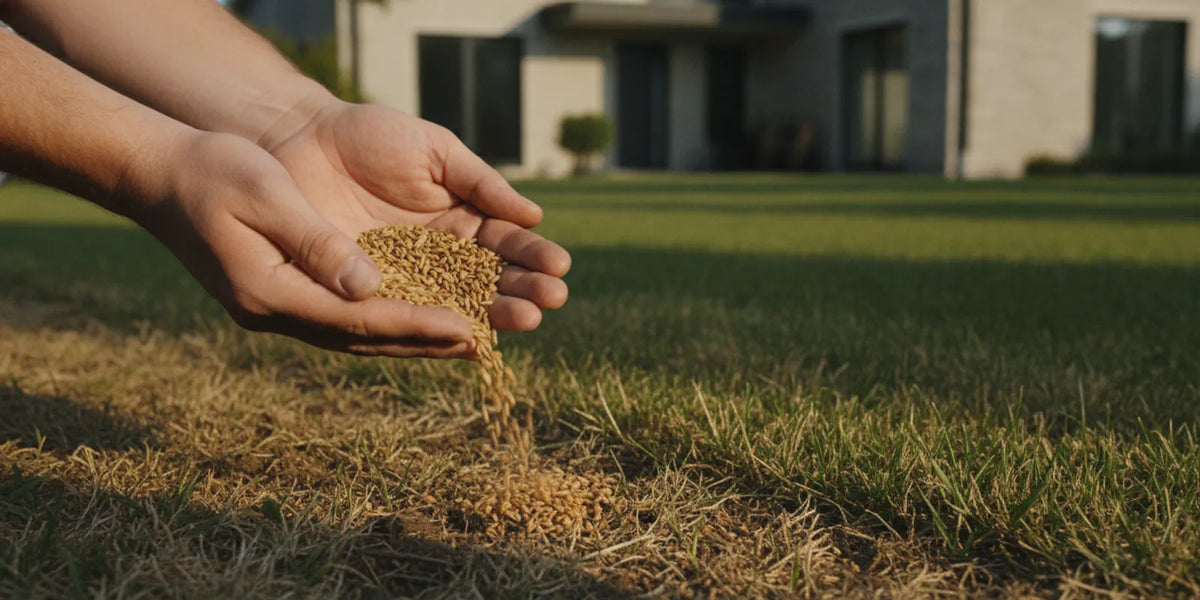
Choosing grass seed for lawns starts with the place where it will grow, not with the most attractive bag or a broad promise on the front label. Climate, sunlight, intended use, and whether you are repairing a patch or starting a lawn all affect which seed is worth considering. A little planning helps you compare options and avoid buying a mix that does not fit your yard.
Ask about product availability and purchase options
Define the lawn job before comparing seed
First, write down what you want the seed to accomplish. A small bare spot, a thin area within an established lawn, a large renovation, and a brand-new lawn are different jobs. A blend intended for general lawn use may be a reasonable starting point for one situation, but it is not automatically the best choice for every repair or planting.
Describe the area in practical terms:
- How large is it? Estimate the square footage of the area that will receive seed. If the shape is irregular, divide it into simple rectangles or triangles, estimate each section, and add the areas.
- What is growing there now? Note whether the surrounding lawn is mostly one type of grass, a mixed lawn, or a collection of different plants. A seed that looks different from the existing lawn may create a visible contrast in color, texture, or growth habit.
- How much light reaches it? Observe the area at several times of day. A spot can receive bright morning light and deep afternoon shade, or the reverse. The view from the house may not show how the sun moves across the ground.
- How will people use it? Consider foot traffic, play, pets, mowing, and whether the area is mostly ornamental. A lawn that gets regular use has different practical demands from a low-traffic strip beside a fence.
- Where is the property? Grass types suit different climate regions. A mix appropriate to one part of the country may not be a good fit elsewhere. Confirm that a label and its recommendations apply to the property's region.
These notes make product comparisons more concrete. Instead of asking only which bag is “best,” you can ask whether its listed grass types and directions fit the place and purpose you have in mind.
Match the seed to the growing region
Grass species are adapted to different temperature patterns and seasons. Broadly, cool-season grasses are commonly used in regions with cooler winters and moderate summers, while warm-season grasses are associated with areas with longer warm periods. Those are general categories, not a complete planting recommendation. Local climate, elevation, exposure, and the seed blend all matter.
In a region with changing seasons, some lawn mixes combine multiple grass types. The mix may be designed to balance traits, but the proportions and species vary by product. Do not assume that two bags described as “sun and shade,” “turf,” or “contractor” mix have the same ingredients. Read the listed varieties and look for recommendations that name a region or climate similar to yours.
For properties in Ohio, North Carolina, and South Carolina, do not treat the three states as one uniform growing zone. Conditions can vary within a state, and products available at one location may not be stocked or suitable at another. If a bag's label is unclear about its intended region, ask the seller or a local lawn professional before deciding. A purchase route is not a substitute for verifying regional suitability.
Understand the names without treating them as a recommendation
Some labels identify individual grass types, while others name a blend or a product line. Names such as Kentucky bluegrass, perennial ryegrass, tall fescue, and fine fescue are commonly encountered in cool-season lawn discussions; warm-season discussions may name grasses such as bermudagrass, zoysia, centipedegrass, or St. Augustinegrass. These examples are not a shopping list for every property in Ohio or the Carolinas. Their suitability depends on local conditions, and the label should state the actual contents and intended region. A familiar grass name is not enough to establish that the product is a match.
When a package lists a blend, look for the composition and the role each listed type is intended to play. If the details are not on the product page, ask for the package information before purchasing. Avoid translating a general name into an assumption about how the lawn will look or perform. Varieties within a named grass type can differ, and a blend can include components selected for different characteristics. Without the label, you cannot reliably compare those details.
It is also helpful to distinguish a seed mix from a seed coating or other added material described on the package. Read the full product description and label rather than assuming that the word “mix” means a particular set of grass species. If the seed contents, proportions, or other components are important to your decision, have the seller confirm them. That detail is especially relevant when you are matching an established lawn or buying enough seed for a larger area.
For lawns in a transition between cooler and warmer local conditions, a statewide label may not answer every question. A site exposed to wind, heat, reflected sun, or shade can have conditions that differ from a nearby yard. Use a regional recommendation as a starting point, then compare it with the microclimate of the area you plan to seed. Where guidance conflicts or remains vague, seek advice from a local lawn professional who can consider the property itself.
When comparing regional fit, ask:
- Does the package identify the grass species or varieties, rather than relying only on a broad product name?
- Does it describe a climate or region where those grasses are intended to grow?
- Is the information aimed at a home lawn, a temporary cover, or another use?
- Does the recommendation match the site conditions, rather than only the state name?
If the package gives only a general description, seek clarification before purchase. A specific product recommendation should be based on the actual label and local conditions, not an assumption about what is stocked nearby.
Evaluate sun, shade, and changing light
Sun exposure is a common reason a grass-seed choice succeeds in one part of a yard but struggles in another. Open ground, a tree canopy, a north-facing side yard, and the strip between a house and a fence can have very different light conditions. “Shade” is not a single setting: a place with filtered light for much of the day is different from an area that receives almost no direct light.
Watch the site on a typical day and note when direct sun reaches it. Consider seasonal changes, too. A deciduous tree may allow more light through before it leafs out than it does later in the growing season. Nearby buildings, fences, and evergreen plantings can cast longer shadows than expected. These observations help you judge whether a product's stated light preference is plausible for the area.
A blend described as suitable for both sunny and shaded areas may be designed for a range of conditions, but the phrase should not be read as a promise that it will thrive in any degree of shade. Check the label for its stated use and limitations. If two sections of the yard have very different light, one single mix may not be the most suitable choice for both. Separate products may be easier to match, provided their appearance and maintenance needs are compatible.
Use a simple light map:
- Sketch the lawn and mark trees, buildings, fences, and other sources of shade.
- Observe the area in the morning, around midday, and later in the day.
- Mark locations as mostly open, partly shaded, or heavily shaded based on what you actually observe.
- Compare those notes with the package's stated light conditions and directions.
- If the label does not explain how much shade it can handle, ask before buying rather than relying on the product name alone.
Deep shade can also point to a site limitation rather than a seed-selection problem. If the location receives very little light, changing seed bags may not resolve the underlying issue. Consider whether another groundcover or landscape treatment is more practical, and get local advice if the right approach is uncertain.
Choose a mix for the intended use
Grass seed labels may describe a product as suitable for a home lawn, a sunny yard, a shaded site, repair, or another purpose. Treat those descriptions as a starting point. The grass species and the complete directions on the package provide better detail than a short name on the front.
Some seed mixes contain multiple types of grass so that the lawn is not relying on one variety alone. Different components can contribute different characteristics, but the combination is product-specific. Compare the ingredient list and intended-use information instead of assuming that every mixed bag has the same performance or appearance.
Think about the daily role of the lawn. A front-yard area that receives little foot traffic may call for a different balance of appearance and toughness than a route used repeatedly to reach a gate.
Areas where children or pets play may need a plan that accounts for wear and recovery, but no seed label should be treated as a guarantee against damage. If use is heavy, ask how the recommended seed fits the expected traffic and what establishment care it requires.
Appearance matters as well. Grass varieties can differ in color, blade width, density, growth habit, and seasonal behavior. A new mix seeded into an existing lawn may not blend seamlessly. When repairing a small area, compare its seed choices with the existing grass as closely as you can. If you do not know what is already growing, take a clear photo or a small sample to a knowledgeable local source for help identifying it.
Compare common seed descriptions
Names on packages are not standardized enough to replace the ingredient list. Use descriptions as clues, then confirm the details on the label. This comparison is a way to frame questions, not a promise about any particular product.
| Package description | What it may indicate | What to verify |
|---|---|---|
| Sun or full-sun mix | Intended for a more open area with substantial direct light. | Regional fit, species listed, and the package's actual light guidance. |
| Shade or sun-and-shade mix | Designed with lower-light locations in mind, or for varied exposure. | How much shade it is intended for; do not infer suitability for deep shade from the name. |
| General-purpose lawn mix | A broad-use product that may include more than one grass type. | Whether its varieties fit the climate, appearance, and use of your lawn. |
| Repair or overseeding mix | Marketed for filling or improving an existing lawn. | Whether it can blend with the existing grass and whether the directions fit your repair area. |
| Single-species seed | Seed centered on one named grass type or variety. | Whether that type is suitable for the region and site, and how its appearance compares with surrounding turf. |
For any product, read beyond the front-panel name. Look for the actual seed contents, stated purpose, region guidance, coverage instructions, and any listed restrictions. If the package includes multiple varieties, the proportions can matter. If those details are not available online, request them before deciding on a purchase.
Decide between a spot repair and broader seeding
A small patch may be handled differently from a thin lawn or a large area of bare ground. The first step is to identify the scale of the job and its likely cause. A patch that has repeatedly failed may have a persistent issue such as shade, concentrated foot traffic, or another site condition. Reapplying seed without considering that pattern can lead to the same result.
For a small bare patch, compare the seed to the grass around it and check whether the area's light and use fit the product. A small bag may be convenient when the repair is limited, but package size alone does not tell you whether the seed is right. Follow the package's application directions and avoid substituting a larger or different-use mix merely because it is on hand.
For a thin area, consider whether the surrounding lawn is healthy enough to fill in or whether it needs broader attention. A mix intended for overseeding may be relevant, but verify the label and product contents. If the lawn contains a distinct grass type, a visually different mix can make the repair stand out.
For a large new lawn or renovation, take extra time to confirm the seed type, quantity, and regional recommendation before ordering. A larger project magnifies the cost of a mismatch. If the project is complex or the site has difficult conditions, ask a local professional to evaluate it before buying. This guide focuses on choosing and purchasing seed; preparation and ongoing care need their own site-specific plan.
Keep the scope of the job clear when discussing products. “Repair” can mean a few small spots, a whole thin lawn, or a major renovation. Tell the seller which one you mean, describe the existing grass and light, and share the approximate area. Those details make a product conversation more useful than asking for a generic lawn seed.
Calculate how much seed to buy
Seed packages usually provide a coverage amount or application rate. Use the rate printed for the specific product and intended use; do not carry a number from one bag to another. A product may provide different guidance for establishing a lawn and overseeding an existing one. The relevant amount depends on the label, the measured area, and the application method.
To estimate quantity:
- Measure the area. Multiply length by width for a rectangle. For a triangle, multiply its base by its height and divide by two. Split an irregular lawn into smaller shapes and total the estimates.
- Separate different conditions. Measure sunny, shaded, and repair sections individually if you expect to use different products or application rates.
- Read the package rate. Find the stated coverage for the use you intend. Confirm whether the label gives coverage per package, per pound, or another unit.
- Calculate from the label. Divide the measured area by the stated coverage per package, or use the package's stated rate to calculate the amount required. Follow its units carefully.
- Check the package size and rounding. Round to a practical amount only after checking the product's directions. Do not intentionally apply extra seed beyond the stated rate as a substitute for a good match or appropriate care.
For example, if a package states coverage for a particular square footage, compare that figure with your measured area and calculate the number of packages from those two values. This is only an arithmetic example; the actual rate and coverage vary by product and application. If you have a partial bag or a complex area, use the label's directions or ask the seller how to interpret them.
Be cautious with coverage estimates from generic online calculators. A tool may use a default product rate that does not apply to the seed you are buying. The package and its instructions should guide the order quantity. Keep a copy of the label or product details so you can refer to the correct rate later.
Read the label before choosing a package
The package label is where a buyer can verify what is actually being purchased. A product name or photograph is not enough to establish the seed mixture, the recommended region, or the appropriate amount. When comparing two bags, look at the same information on each.
- Seed types and varieties: Check the listed names and any percentages provided. A blend's ingredients are more informative than a generic phrase such as “premium lawn.”
- Intended use: Identify whether the product is for establishing a lawn, overseeding, patch repair, or another stated purpose.
- Coverage and application rate: Confirm the amount for your specific use and the units used in the directions.
- Regional or seasonal guidance: Check whether the product is recommended for conditions like yours. Avoid treating a broad geographic label as a guarantee.
- Restrictions and instructions: Read any warnings, limitations, and directions before purchase so you know whether the product fits your plan.
- Net contents and packaging: Confirm the bag size and how the quantity is expressed. Similar-looking packages can contain different amounts.
If a listing does not show the complete label, ask for a photo or the missing details. This is especially useful when shopping online, ordering for a large area, or trying to match an existing lawn. Do not infer seed species or coverage from a product title alone.
Plan the purchase, pickup, or delivery
Once you have identified the kind of seed you need, confirm that the specific product is currently available through the purchase route you plan to use. Online product listings and store selection pages can have separate functions, and stock may differ by location. A listing does not guarantee availability at every yard or fulfillment to every address.
Before placing an order, confirm:
- Whether the product is listed for the location or region serving your property.
- Whether the quantity you need is available, including package size and number of bags.
- Whether the order is for pickup, delivery, or another fulfillment option.
- Whether delivery is offered to your address and what the checkout or seller confirms about charges, timing, and access.
- Whether the product information includes the seed mix, label, and coverage details you need to make a decision.
Location matters. A company's presence in a state does not mean every product is carried at each location or that all addresses are within a delivery area. Use the store and warehouse selector to start checking the appropriate location, then confirm the product and fulfillment details directly. The selector helps route the inquiry; it does not by itself establish current inventory.
For purchase options and questions about a particular property, use the contact page and include your location, requested quantity, and preferred pickup or delivery method. If you're comparing other lawn products, review the lawn repair mix listing for its current product details rather than assuming it is interchangeable with another seed. Availability and product specifications should be verified before checkout.
When browsing broader lawn and landscape information, the landscape supply guides can help you find related topics. For a question about seed itself, make sure the answer is based on the exact product label and local conditions. A general article or a catalog category cannot confirm stock or promise a delivery date.
Common buying mistakes to avoid
- Choosing by the front of the bag alone. A name such as “sun and shade” does not reveal the complete blend or the limits of its use. Read the ingredient and direction details.
- Using one product everywhere. Different parts of a yard may have different light, use, and existing grasses. A single mix may not suit every section equally well.
- Ignoring regional fit. A product available online may not be recommended for your climate. Check the label and request location-specific guidance.
- Ordering by guesswork. Measure the area and use the coverage rate on the actual package. Generic estimates may not reflect the selected seed or use.
- Expecting seed to fix every thin spot. Repeated failure can point to an ongoing site condition. Choosing another bag without understanding the condition may not address the cause.
- Assuming two bags are equivalent. Product descriptions can sound similar while listing different species, proportions, or instructions. Compare the labels directly.
- Assuming a product is in stock everywhere. Check the location and current order options before travelling or planning work around a delivery.
- Confusing seed selection with lawn preparation. Seed choice is only one part of a successful project. Keep the seed label, site plan, and preparation and care guidance aligned; do not rely on seed selection alone to solve other lawn issues.
Compare shortlisted products side by side
If two or three products appear to fit, compare them using the same criteria rather than relying on different promotional phrases. Write each product name down, then record its listed grass types, intended region, light guidance, intended use, package size, and coverage directions. This makes missing information visible and helps you avoid choosing by a single appealing feature.
First eliminate any product that clearly does not fit the site. For example, if a package is not intended for the property's region, it should not stay on the shortlist just because it claims broad coverage. Next, compare the remaining options against the lawn's strongest constraints: whether the seed must blend into an existing grass, whether the area is mostly shaded, or whether the job is a large new planting rather than a few repairs. A product that fits those needs is more relevant than one that scores well on an unrelated feature.
Then compare product contents and directions. If one listing names grass types and another gives only a vague description, ask for the missing label information before deciding. Consider the amount of seed required from each product's actual coverage rate, not just the price of a bag. Package sizes differ, and a lower shelf price does not show the cost of the quantity needed for the area. Check whether enough packages are available at the location you will use, too.
Use a simple note sheet:
- Product identity: Record the exact product name and package size so that a question or order refers to the right item.
- Fit: Note the region, light conditions, intended use, and any limitations shown on the label.
- Compatibility: Record whether its appearance and listed grass types seem compatible with the existing lawn.
- Quantity: Calculate the amount using the product's own application directions.
- Fulfillment: Confirm current stock, location, pickup or delivery choices, and any relevant order conditions.
If one of these fields is blank, it is a question to resolve rather than a reason to guess. A seller can help clarify current product information and order options, while a local lawn professional can help assess the site and regional fit. Those are different kinds of advice: a seller's confirmation of availability does not replace an agronomic recommendation, and a general recommendation does not confirm that a product is in stock.
Prepare useful details before asking for help
A focused question is more likely to get a useful answer than a request for “the best grass seed.” When contacting a seller about a product or purchase, share your town or ZIP code, the product name if you have one, the estimated area, and whether you need pickup or delivery. Ask directly whether the item and quantity are currently available through the location or order route you plan to use. Confirm whether the product page or package label can be shared if you need to compare the seed contents.
If you are seeking site guidance, include more than the location. Describe the amount and timing of sun, the existing grass if known, the type of use and traffic, and whether you are filling a small patch or treating a larger area. A few clear photos can help show the site, but they may not reveal all its conditions. Be specific about what you do not know, such as the existing grass type or the degree of shade.
Keep commercial and technical questions separate. For an order, confirm price, quantity, current availability, and fulfillment with the seller through the applicable checkout or contact route. For a lawn-specific product choice, ask someone qualified to assess the local conditions. If advice depends on a detail you cannot verify, request clarification rather than making a costly assumption. This simple preparation can make comparisons more efficient and keep the purchase decision grounded in the actual product and property.
Use a short checklist before checkout
Before committing to a product, be able to answer these questions:
- What is the exact area to be seeded, and how did I measure it?
- Is this a spot repair, overseeding, a new lawn, or a broader renovation?
- What grass is growing nearby, and should the new seed match it?
- How much direct sun and shade does the area actually receive?
- Does the product's stated region and intended use fit the property?
- Have I checked the seed contents and directions, not just the product name?
- What quantity does the specific package recommend for my intended use?
- Have I confirmed current location-specific availability and pickup or delivery options?
If you cannot answer one of the product questions, pause and get the missing detail before ordering. A quick check can help prevent a mismatch in grass type, quantity, or fulfillment expectations.
Confirm local availability and ask about your order
Common questions about grass seed for lawns
How do I choose grass seed for lawns in a sunny yard?
Start with a product intended for your climate and compare its listed grass types and directions with the site's amount of direct sun. “Sunny” on a package is a useful clue, but check the label's complete guidance and confirm that the mix suits your region. If the yard has both open and shaded sections, assess them separately rather than assuming one product fits both.
Can I use the same seed in sun and shade?
Possibly, if the package is specifically intended for the conditions in both areas, but the name alone is not enough to decide. Shade can range from light filtering through trees to very little direct sun. Compare the actual site with the label, and consider separate mixes for substantially different conditions. A seed product cannot guarantee success in a location that does not meet its needs.
Should I buy a repair mix or general lawn seed?
Use the stated purpose as one factor, then compare the species, region guidance, and directions with the existing lawn and size of the job. A repair product may be aimed at patching or overseeding, while a general lawn mix may have a broader purpose; exact meanings vary by product. Check the label or ask for the product details before substituting one for the other.
How much grass seed should I buy?
Measure the area and use the coverage or application rate printed for the specific product and intended use. Packages may give different guidance for starting a lawn and overseeding. Do not use a generic coverage estimate when the selected product's label gives a different rate. If you're unsure how to calculate the amount, share the measured area and product details with the seller.
Does an online listing mean the seed is available at my nearest location?
No. A listing does not establish current stock at every yard or confirm delivery to every address. Check the store or warehouse serving your area, then ask about the exact product, quantity, and fulfillment option before travelling or placing an order.
The best grass seed choice is the one whose listed contents, regional guidance, intended use, and coverage directions fit your lawn and your plan. Measure first, compare labels, and confirm local product and fulfillment details before buying.
