
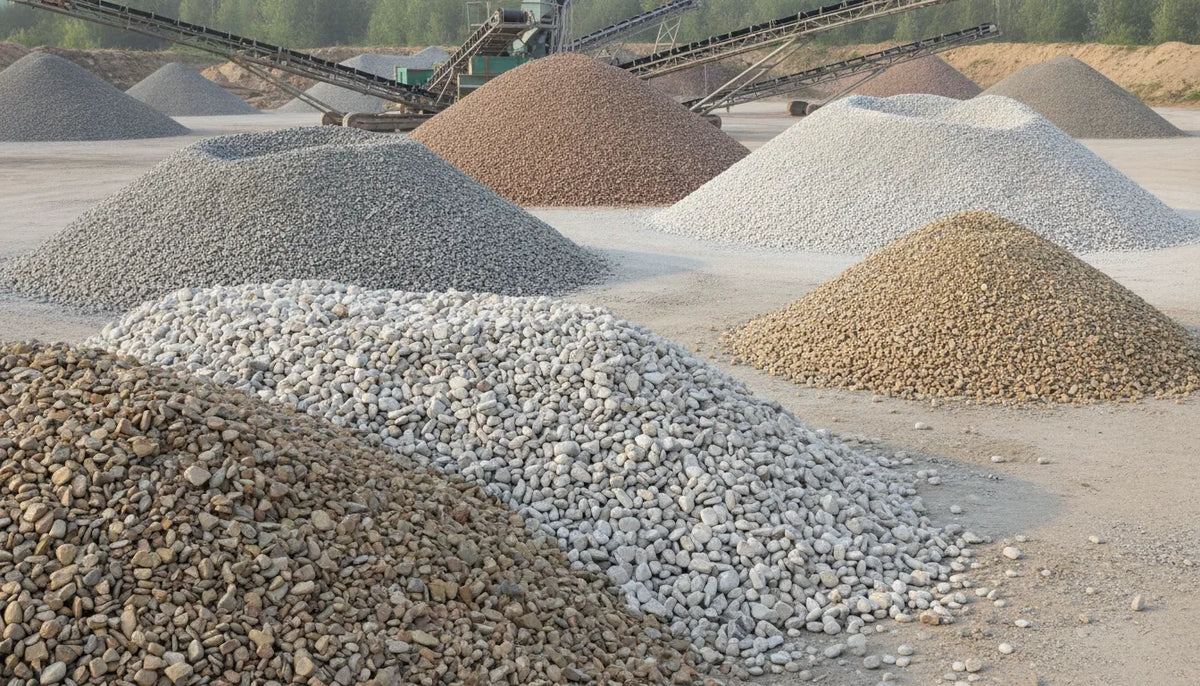
When you compare types of gravel, start with the job the stone must do: move water, create a stable base, cover soil, finish a walkway, or add a natural-looking surface. Size, shape, gradation, color, and the amount of fine material all affect how gravel handles traffic and water. The right choice for a French drain is not automatically the right choice for a driveway.
Call (330) 656-5720 to discuss gravel for your project
Quick guide to common gravel types
Gravel is a broad category, not one uniform material. A product name or number usually describes the stone size or blend, but the number alone does not tell you whether it will compact, drain freely, or stay in place on a slope. Use the table below as a starting point, then confirm the current product, warehouse, delivery method, and jobsite conditions before ordering.
| Gravel type or size | Typical characteristics | Good fit for | Watch for |
|---|---|---|---|
| #57 gravel | Rounded pieces approximately nickel- to quarter-sized | Drain tile cover, French-drain filtering, walkways, and ground cover | Rounded stone does not lock together like angular crushed limestone and is not a strong driveway choice |
| #34 gravel | Larger rounded pieces, described on the product page as golf-ball to egg-sized | Foundation drainage, French drains, drain-tile cover, walkways, and decorative beds | It is not recommended for driveways because it does not compact like crushed limestone |
| #8 gravel | Small aggregate used for practical landscape and property work | Projects that need drainage and a clean, natural-looking finish | Confirm the intended use and depth rather than choosing by appearance alone |
| Pea-size gravel | Small, rounded stone with natural tones | Landscaping, walkways, patios, drainage areas, and some driveway applications | Small rounded pieces can move under heavy traffic or on a steep grade |
| Crushed stone or a compactable blend | More angular material can interlock and form a firmer base | Base layers, repairs, and areas where stability and compaction matter | Verify the actual blend and gradation; not every aggregate sold as gravel is interchangeable |
This is a planning guide, not a substitute for a product-specific recommendation. Sagamore's gravel for sale collection includes products from different locations and material profiles. Not every stone is available at every location, so check the current listing and call before you build the order around a specific size.
How size changes gravel performance
Particle size affects drainage, appearance, stability, and how much material you need to place. Larger pieces leave bigger voids between stones, which can help water pass through but may make a surface less comfortable to walk on. Smaller pieces create a finer-looking finish and can fill gaps, but a small rounded stone may still shift when it is exposed to tires, foot traffic, or runoff.
Numbers such as #57, #34, and #8 are useful product identifiers, but they should not be treated as a universal promise about every supplier's material. Stone can vary by source and screening process. Ask which gradation is being sold, whether fines are present, and whether the product is intended as a surface, drainage stone, or base.
#57 gravel for drainage and ground cover
Sagamore's Ohio #57 gravel is described as approximately nickel- to quarter-sized and rounded. The product page identifies it as a cover for drain tile around foundations and a filtering medium for French drains. It can also work for walkways and ground cover when the conditions are suitable. Because it is rounded rather than angular like limestone, the page specifically cautions that it is not great for driveways.
That distinction matters on a contractor estimate. If the specification is a drainage layer, #57 may be a useful starting point. If the customer wants a surface that resists tire movement, ask about a more angular, compactable material instead of assuming that any similarly sized gravel will behave the same way. Review the current #57 gravel product details before you quote quantity or fulfillment.
#34 gravel for larger drainage stone
The Ohio #34 product page describes pieces ranging from golf-ball to egg-sized and notes that the rounded shape supports drainage applications. It lists French drains, foundation drainage, drain-tile cover, walkways, landscape beds, and decorative ground cover as common applications. That makes #34 a candidate when a project calls for a larger rounded stone, visible texture, and water movement around a foundation or drain system.
The same product information says #34 is not recommended for driveways because it does not compact like crushed limestone. Use that warning during material selection. A drainage stone and a driveway base may both be called gravel in casual conversation, but they have different performance requirements. See the #34 gravel product details for the current description and ordering information.
Related products

Looking for the perfect stone to accent your garden?
View product

Drainage, decorative garden-bed borders, walkways and paths.
View product#8 gravel for a smaller finished surface
Gravel #8 is another Ohio aggregate listed for drainage and landscaping. Its product description presents it as a practical choice for homeowners, landscapers, and contractors who need material by the ton, with a clean, natural-looking finish for suitable landscape and property applications. It can make sense when the project calls for a smaller aggregate profile than a larger drainage stone, but the correct use still depends on the installation design and site conditions.
Before you specify it, compare the actual product listing with the project's required depth, edging, slope, and traffic level. The #8 gravel listing is the right place to confirm the current product information rather than relying on a generic number from another supplier.
Rounded gravel versus angular crushed stone
Shape is one of the most important differences among gravel products. Rounded river or naturally worn stone has smooth edges and tends to roll or move more easily. That can be desirable for drainage, decorative beds, and some walkways. It is less desirable when a surface must lock together under repeated vehicle loads.
Angular crushed stone has fractured faces that can interlock. With the right gradation and preparation, that can create a more stable base for a driveway, patio, parking area, or access route. However, “angular” does not mean every crushed product is suited to every base. Confirm whether the material is sold as a base, surface course, or drainage stone and whether the project needs fines for compaction.
When a customer asks for gravel for a driveway, ask three questions:
- Is this a new base, a top surface, or a repair over an existing driveway?
- Will cars, delivery trucks, or construction equipment use the area?
- Does the site drain well, or does it need a separate drainage layer first?
Those answers help separate a decorative or free-draining stone from a material intended to form a firm driving surface. They also reduce the chance of sending a rounded drainage product to a job where the customer expects compacted traffic performance.
Choosing gravel by project
French drains and foundation drainage
Drainage projects need open space between stones so water can move toward a perforated pipe or away from a foundation. #57 and #34 are both described on Sagamore product pages for drain-tile cover and French-drain or foundation-drainage uses. The correct choice depends on the pipe, filter fabric, trench design, surrounding soil, and the size of stone specified by the project plan. Gravel alone does not correct an improperly sloped or undersized drainage system.
Walkways and landscape beds
For a walkway or landscape bed, appearance and comfort matter along with drainage. A smaller pea-size product can create a softer, natural look, while larger #57 or #34 stone gives a more visible, textured finish. Use edging and a properly prepared subgrade to reduce migration. On slopes, confirm whether the rounded material will stay in place during rain.
Pea-size gravel is described in Sagamore's product information for landscaping, walkways, patios, drainage areas, and some driveway applications. Read the current pea-size gravel listing for the product-specific description, then confirm location and availability before planning delivery.
Driveways, parking areas, and access routes
Driveway work usually needs stability, drainage, and a surface that can tolerate repeated loading. A rounded decorative stone may look attractive but move under tires. A compactable blend or angular crushed stone may be more appropriate, especially for the base layer. The right assembly can include more than one material: a prepared subgrade, a base course, and a finished surface selected for traffic and water conditions.
Do not choose solely by color or the number on a previous invoice. Verify the product, region, unit, depth, and intended use. If the order requires placement beyond a truck dump, discuss access and whether a separate placement service is appropriate. Sagamore describes its Slinger Trucks as a method for distributing materials such as stone, topsoil, and sand where the project needs them, but placement still depends on site access and qualification.
How much gravel should you order?
Quantity depends on the area's length and width, the planned depth, the material's density, and whether the job includes a base layer or multiple courses. Measure the area, confirm the design depth, and ask how the supplier sells the selected product. Sagamore's aggregate listings include products sold by the ton, but the correct quantity is not interchangeable across stone types because density and gradation differ.
For a contractor estimate, record:
- Surface dimensions and the planned compacted or placed depth.
- Whether the material is for drainage, base, surface, decorative cover, or a combination.
- Access limits, turning space, overhead wires, gates, slopes, and the intended drop location.
- Warehouse or service area, requested date, delivery method, and whether placement is needed.
- Whether taxes, delivery, labor, placement, or other charges are separate from the material.
For a deeper unit-planning reference, compare the practical guidance in cubic yards versus tons for landscape materials. The product page and checkout or quote process establish current availability and shipping estimates for the selected location.
Gravel ordering checklist
Before you order, match the stone to the project rather than matching the project to a familiar product name.
- Define the job: drainage, base, driveway, walkway, landscape bed, or ground cover.
- Choose the performance: free drainage, interlocking stability, decorative appearance, or a balance.
- Confirm the product: read the current description and verify the size, shape, region, and unit.
- Calculate quantity: use measured dimensions and the planned depth, then confirm the supplier's recommendation.
- Plan delivery: identify the warehouse, address eligibility, truck access, drop zone, and any placement needs.
- Recheck before checkout: availability, delivery estimate, taxes, and other charges can depend on the address, warehouse, date, and fulfillment method.
Get help selecting the right gravel
The most useful gravel comparison is the one that connects stone size and shape to the actual jobsite. Sagamore Companies supplies aggregate products for qualified projects in Northeast Ohio and the Charlotte, NC metro area, with availability and fulfillment dependent on the selected product, location, warehouse, date, and site conditions. If you are unsure whether the project needs #57, #34, #8, pea-size gravel, or a compactable blend, call before ordering.
Call (330) 656-5720 for gravel selection and delivery questions, or use the contact page to request the next step for a qualified material or project-service inquiry.
