
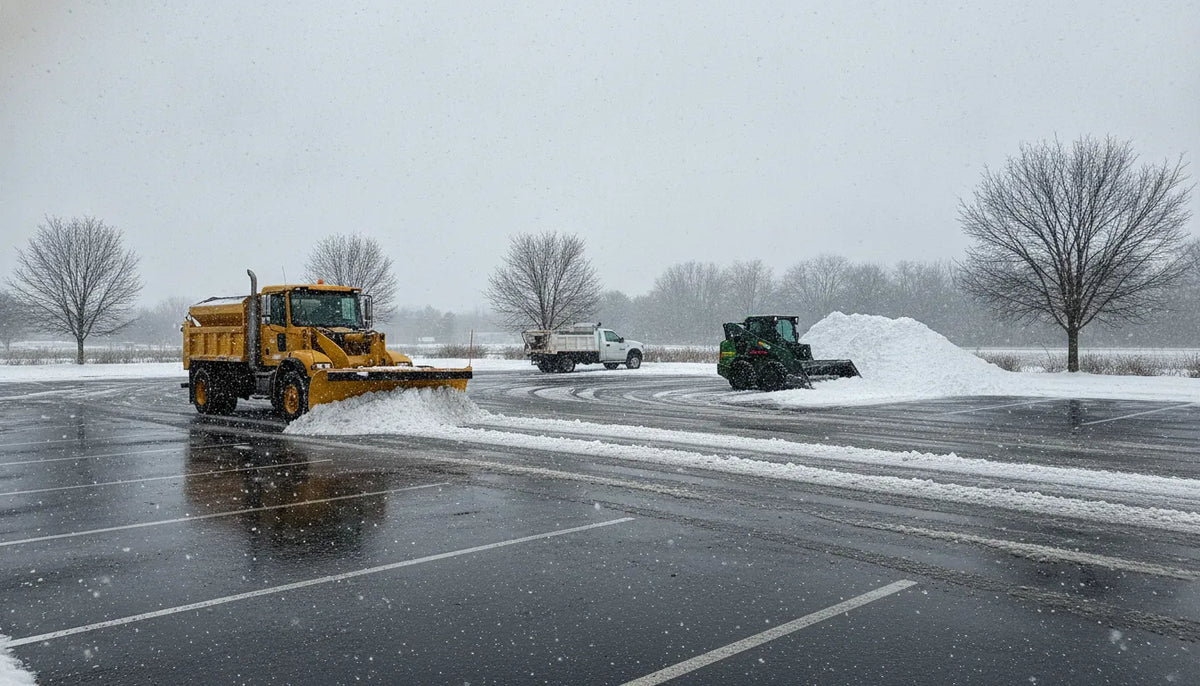
How much does commercial snow removal cost depends on the property in front of you. Scope and storm pattern change the bill too. A small office lot and a large retail center do not produce the same bill, even in the same storm. Sagamore Companies plans commercial snow removal for large properties across Northeast Ohio, including lots from 1 to 60 acres, and every price is set only after the site and scope are confirmed.
Call (330) 656-5720 to request a commercial snow quote for your property.
There is no single published rate that covers every address. Checkout is for bulk materials. Snow and ice work is a separate quote. Delivery, salt, labor, hauling, and extra visits can sit outside a base plow price. The useful question is which factors will move your number, and which details the quote has to name before you compare providers.
How Much Does Commercial Snow Removal Cost by Factor
Property managers usually start with square footage or acreage. Size matters, but it is not the whole story. A tight lot with islands, carts, and constant traffic can take longer than a wide industrial yard of the same size. Depth, timing, and what "clear" means on your site change the crew, the equipment, and the number of passes.
Sagamore reviews property size, parking layout, and priority zones before building a snow plan. That review is the same work that makes a cost conversation specific. If the quote skips layout, trigger depth, sidewalks, or where snow will go, the price is not comparable to another bid.
Property size and layout
Measure the surfaces you actually need open, not just the parcel. Include drive lanes, parking stalls, loading areas, fire lanes, and the walkways people use to reach doors. Note islands, curbs, speed bumps, gates, and low clearances. Those features slow plows and can require a skid steer instead of a truck-only pass.
On the live snow service page, Sagamore describes work for commercial and industrial sites from 1 to 60 acres in Northeast Ohio. A one-acre office lot and a multi-acre retail or industrial site are different jobs. Say which acres must be open first, and which areas can wait until the main routes are clear.
What the scope includes
Plowing a lot is not the same service as full snow and ice management. A base scope might cover vehicle areas only. A fuller scope can add sidewalks, entrances, accessible routes, salting, and a return visit when drifts or refreeze close a lane again. Each added surface adds time and, often, a different piece of equipment.
Ask the provider to name the areas in writing. "Snow removal" by itself does not tell you whether walkways, ice treatment, or hauling are included. If those items are optional, the quote should show them as separate lines so you can see what you are buying.
Storm depth, timing, and frequency
Two inches of light snow is a different event from a long, wet storm that keeps falling while the lot is in use. Heavier snow, back-to-back events, and overnight or early-morning openings add labor. A property that must be open before dawn may need a different start time than a site that can wait until mid-morning.
Frequency is a contract choice, not a weather fact. Some sites want service after every accumulation. Others want service only after a set depth or only before operating hours. That choice changes how many visits a season might include. It should be written as a trigger, not left as "as needed."
How Commercial Snow Pricing Is Usually Structured
Commercial quotes tend to use one of a few structures. The right one depends on how predictable your site is and how much risk you want to carry if the winter is heavy or light. None of these is a Sagamore price list. They are the questions to ask so the quote you receive is readable.
| Pricing structure | What you are paying for | What to confirm |
|---|---|---|
| Per visit or per push | One defined clearing on the agreed surfaces. | Trigger depth. What counts as a second push. Whether ice treatment is extra. |
| Per event | Work tied to one storm. It may include more than one pass. | When the event ends. How a long storm is split into extra visits. |
| Seasonal contract | A season of agreed service with a stated scope and trigger. | What is included. What is capped. How a heavy winter is billed past the cap. |
| Time and materials | Actual crew time, equipment, and materials used. | How time is recorded. Which equipment rates apply. How salt is billed. |
| Hauling add-on | Moving piled snow off the lot or to a remote pile. | When piles must move. Where snow can go. How loads are counted. |
Per-visit pricing is easier to compare on a small, simple lot. It can surprise you in a winter with many small storms. A seasonal figure can be easier to budget, but only if the contract says what happens when storms run long or when sidewalks and salt were never in the base scope. Time-and-materials pricing tracks the work that actually happened. It needs a clear record of hours, equipment, and material so the invoice matches the site.
Sagamore's own service page states the point plainly. Pricing depends on property size, snowfall, and how often service is needed. Some companies offer seasonal contracts. Others charge per visit. Treat any number you see online, including ranges from other markets, as background only. Your quote has to be built from this address, this winter, and this scope.
Scope Items That Move the Quote
Once the pricing structure is clear, walk the line items. This is where two quotes with similar totals hide different work. A lower number that covers plowing only is not cheaper than a higher number that includes walks, salt, and a morning recheck. Match the lines before you match the totals.
Lot plowing and priority zones
The core line is usually the parking lot, drive lanes, and site entrances. Mark the routes that must open first. A loading dock used at 5 a.m. is not the same priority as overflow parking. Sagamore's process starts with a property assessment, then a plan around traffic areas and priority zones, then storm monitoring, plowing and ice control, and a final clearing after the storm.
That sequence has a cost shape. A single end-of-storm pass is less work than staged pushes during a long event. If your operation cannot close, say so. The quote should say whether crews return while snow is still falling, or only after accumulation stops.
Sidewalks, entrances, and accessible routes
Walkway clearing is often a separate task because truck plows do not belong on narrow paths. Entrances, curb ramps, stairs, and accessible parking need hand work or smaller equipment. If those areas are missing from the quote, assume they are not included. Many cities also expect property owners to clear sidewalks. Confirm what your site is responsible for, then decide whether the service covers it.
Ice control is not the same line as plowing
Salt and de-icing are their own scope. A plowed lot can still be icy. Refreeze after a daytime melt is a common reason for a second visit that was never priced. Ask whether ice treatment is included, billed per application, or left to your crew.
Sagamore supplies bulk road salt, bagged salt, and calcium chloride for Northeast Ohio buyers, with pickup, commercial delivery, and slinger placement into a salt bin. That material purchase is not the same thing as a snow service contract. If your team spreads its own deicer, price the product through the bulk salt and ice melt path. If you want the service provider to apply it, put application in the service quote. Do not assume one price covers both.
Hauling versus pushing snow aside
Pushing snow to the edge of a lot is usually the base method. Hauling it away costs more because it needs loaders, trucks, and a place to take the snow. Tight retail lots, stacked parking, and sites with no legal pile area run out of room after a few storms. Say where snow may be stacked, and at what pile height you expect it to be moved. If the quote is silent, hauling is probably extra.
What to Send Before You Ask for a Number
A useful quote starts with site facts, not a request to "keep us clear." The same details that shape a winter plan also shape the price. You do not need a finished specification. You do need enough for the provider to see the work.
Send these items with the request:
- The property address and a simple map or aerial with entrances, fire lanes, loading areas, and walkways marked.
- Approximate paved area or acreage, plus any zones that are lower priority.
- Operating hours and the time the main routes must be usable.
- Where snow can be piled, and whether hauling should be priced as an option.
- Whether sidewalks, accessible routes, and ice treatment are in scope or out of scope.
- Gates, height limits, overnight parking, and surfaces equipment should avoid.
- Any trigger you care about, such as a depth, a time of day, or a request for service during a long storm.
Service area is address-specific. Sagamore identifies Northeast Ohio for this snow work, with Ohio locations that include Hudson, Macedonia, North Ridgeville, and Chagrin Falls. Charlotte-area concrete and material work is a different service. Do not assume a snow crew is available for every ZIP. The quote is where dispatch limits and site access get confirmed.
If you are still comparing companies, use a separate checklist for vendor fit. The guide on how to choose a commercial snow removal company covers equipment, communication, and how to read scope. This article stays on cost. Read both, then ask each bidder to price the same map.
How to Read the Quote Without Guessing a Rate
When the quote comes back, check the words before the total. A clean commercial quote tells you the surfaces, the trigger, the pricing structure, and what is extra. If those four items are missing, you cannot tell whether the number is high or low.
Match line items to the map
Every priced line should point at a place on your map. Lot plowing, sidewalk clearing, ice treatment, and hauling should not be blended into one vague phrase. If a line says "snow management," ask what tasks it includes on this property. Then ask what a second push costs if the storm continues past the first clearing.
Separate materials from service labor
Salt can show up in two places. It can be a material you buy and store, or a material the crew applies during a visit. Those are different costs. A service quote might include applications. It might list salt as a pass-through. It might exclude salt because your crew handles ice. None of those choices is wrong if it is written down.
For buyers who stock their own material, the articles on bulk salt procurement and bulk salt storage and handling cover ordering and on-site storage. They do not price a plow contract. Use them when the cost question is about deicer supply, not about crew visits.
Watch the items that change after the first storm
The first quote is a plan. The season will test it. Piles grow. A tenant changes overnight parking. A new gate limits a plow route. Refreeze creates icy walks that were not in the original walk scope. Build a way to update the price when the site changes, instead of discovering the change on an invoice.
Also separate a response goal from a promise. Sagamore monitors storms and deploys crews for commercial properties, and the snow page describes 24/7 storm monitoring. That is not a guaranteed clock time for every address or every storm. Weather, traffic, and the number of sites in the queue affect timing. Ask how your site is sequenced. Do not treat a marketing line as a service-level agreement.
For the wider winter picture, the Northeast Ohio winter planning guide covers priority zones, triggers, and what to include in a quote request. Use that page to prepare the site. Use this page to understand why the price moves. Then send both the map and the scope to the quote form.
A Practical Way to Compare Two Bids
Lay the bids next to the same seven facts you sent. If one bidder priced sidewalks and the other did not, the totals are not comparable. If one used a seasonal cap and the other used per-visit pricing, ask both to show a light winter and a heavy winter in plain language. You are looking for the same work, not the smallest opening number.
Then look at risk. A seasonal number can look higher in a mild year and lower in a hard one. A per-visit number does the opposite. Time and materials moves with the hours actually worked. Pick the structure your budget can explain to an owner or a board. Ask the bidder to state what is included before you sign, including ice treatment and any hauling threshold.
Sagamore's commercial snow work is aimed at property managers and businesses that need lots, access roads, and walkways usable through a storm. The service path is a quote, not a cart. Material orders for salt stay on the product side. Keeping those paths separate prevents a plow price from being mistaken for a delivered ton of salt, or the reverse.
Frequently Asked Questions
How much does commercial snow removal cost for a small lot?
There is no Sagamore rate card for a small lot. Cost still follows paved area, layout, trigger depth, and whether walks and ice treatment are included. Send the address and a marked map so the quote matches the site instead of a generic range from another market.
Is a seasonal contract cheaper than per-visit pricing?
It depends on how many events you have and what the contract caps. A seasonal price can be easier to budget. A per-visit price can cost less in a light winter and more in a heavy one. Compare the included surfaces and the extra-visit rules before you compare the totals.
Does the plow price include salt and sidewalks?
Only if the quote says so. Sidewalks and ice control are often separate from lot plowing. Bulk salt you buy for your own crew is a material order. Salt the service crew applies belongs in the service quote. Ask for each one as its own line.
When should a commercial property request a snow quote?
Ask before the season, while there is time to walk the site and agree on triggers. Sagamore's snow process starts with a property assessment and a management plan, then storm monitoring. A quote requested after the first storm can still be scoped, but the site details are harder to confirm in active weather.
Do I get a guaranteed clear-by time?
No. Storm timing, travel, and the number of properties in the queue affect when a crew arrives. Describe the hour your site must be usable, and ask how that priority is handled. Treat any stated response as a plan to confirm, not as a guaranteed window.
Request a Quote for Your Site
If you manage a commercial property in Northeast Ohio and need a number tied to your lot, send the map, the hours, and the scope. We will confirm whether the address fits our snow service and what the quote includes.
Call (330) 656-5720 or use the quote form on the commercial snow removal page. Have the property address ready, along with the areas that must stay open and whether you need walks, ice treatment, or hauling priced as well.
